The RIDE methodology

Ever feel like your dreams are trapped behind a wall of obstacles, both seen and unseen? You’re not alone. But what if those obstacles could be transformed into stepping stones? The RIDE methodology unlocks the secret: Reflecting on your deepest desires, Investigating your blockers, Doing practical tasks for progress, and Elevating your future self. This infographic is your roadmap to self-improvement, showing you how RIDE can pave the way to a fulfilling future.
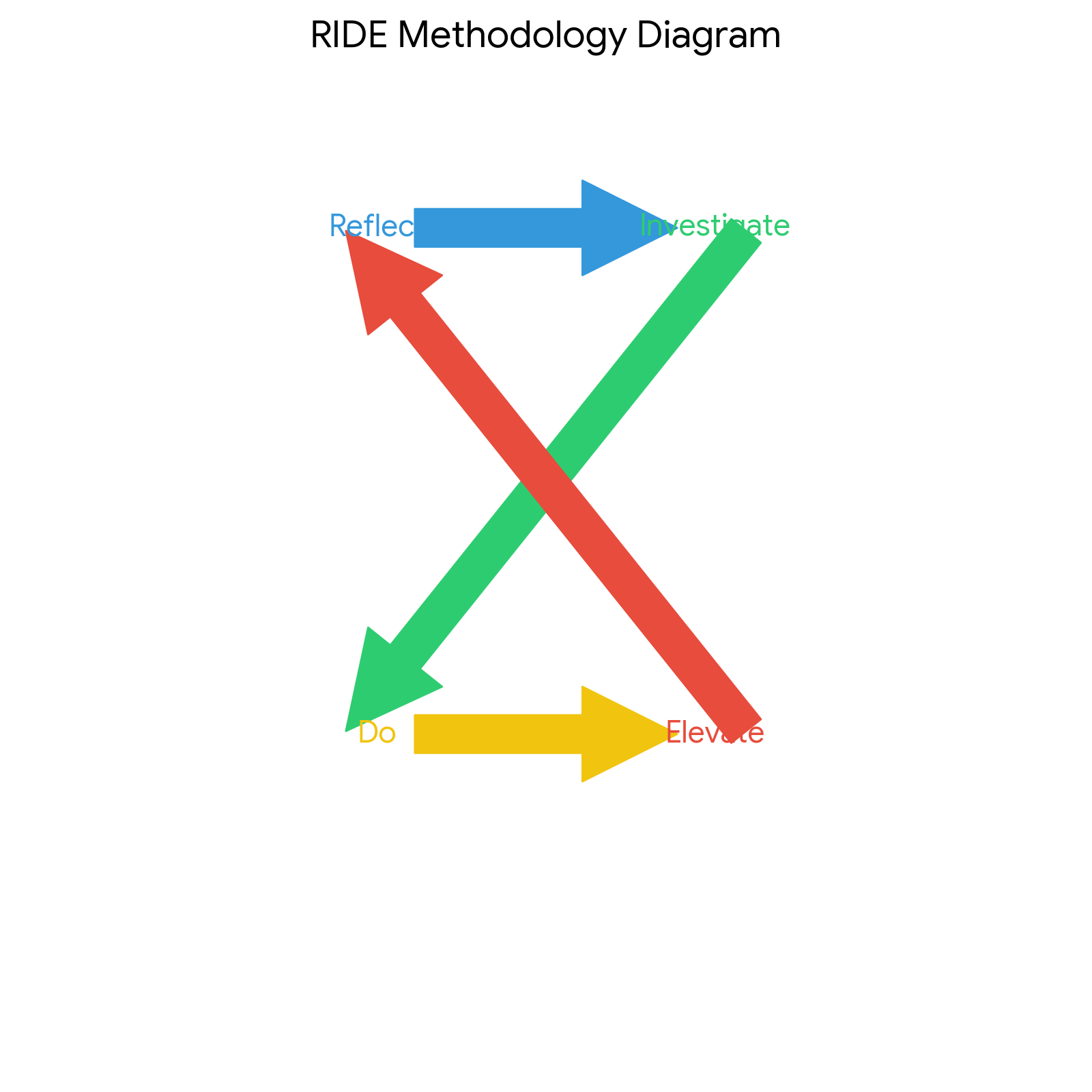
R: Reflect on Your Inner Compass Before embarking, pause and ask, “What truly matters to me?” Like Anna, who dreamt of becoming a renowned author, identify your burning desire. This, like Anna’s moment of clarity, is your guiding star. Remember, Lao Tzu reminds us, “The journey of a thousand miles begins with one step.” Yours starts with identifying your destination.

I: Investigate Your Inner Dragons No hero slays the dragon without understanding it. Here, face your “dragons” – those self-doubts, fears, or limiting beliefs that hinder your progress. Michael, a talented musician, discovered his dragon was stage fright, rooted in past failures. Only by acknowledging and confronting this fear could he conquer his stage and shine. Remember, as the Zen proverb says, “Obstacles do not block the path, they are the path.” Use them to grow stronger.

D: Do the Daily Dance of Progress Dreams are beautiful, but action is the bridge to reality. Divide your journey into small, actionable steps, like laying stones across a river. Sarah, who yearned to run a marathon, broke her goal into daily runs, gradually increasing the distance. Each step, like Sarah’s, is a victory, building strength and turning dreams into achievable goals. Channel Pablo Picasso’s wisdom: “Action is the foundational key to all success.” Take action, one step at a time.

E: Elevate Your Future Self Imagine your future self, successful and thriving. This vision, like John’s dream of leading his own startup, becomes your wind in the sails. It propels you forward, even through storms. Abraham Lincoln said, “The best way to predict your future is to create it.” So create your future, one step at a time.

The RIDE is More Than a Map, It’s a Philosophy RIDE isn’t just a strategy, it’s a way of life. Reflecting gives direction, investigating empowers you to overcome, doing builds momentum, and envisioning propels you forward. Remember, the journey itself holds the beauty, the growth, and the discoveries. As Ralph Waldo Emerson said, “Life is a journey, not a destination.” Embrace the RIDE, dear adventurer, and transform your path into a journey of endless possibility.

The Paradox of Productivity: Embracing the Lion’s Work Ethic


In our fast-paced world, productivity is often hailed as the key to success. We are constantly told to work harder, longer, and faster to achieve our goals. However, there exists a paradox within this notion of productivity, one that draws inspiration from the majestic lion’s work ethic. Just like the king of the jungle, we can learn to balance our efforts by embracing the art of sprinting, resting, and repeating. Let’s delve into this paradox and explore how incorporating moments of rest can actually boost productivity and lead to more sustainable success.

Sprint: Unleashing the Lion’s Roar
The lion is a symbol of power and strength, renowned for its explosive bursts of energy when hunting. Similarly, in our work lives, there are moments when we must unleash our inner lion and sprint towards our goals with unwavering focus. These sprints represent periods of intense effort and dedication, where we give our best to achieve significant milestones. During these phases, we prioritize tasks, eliminate distractions, and channel our energy like the mighty lion chasing its prey.

Rest: The Power of the Lion’s Slumber
Yet, even the most powerful of beasts needs to rest after a hunt. Rest is not a sign of weakness; rather, it is a crucial aspect of maintaining a sustainable work ethic. Just as the lion conserves its energy during periods of inactivity, we too must recognize the importance of downtime. Rest allows us to recharge our minds and bodies, promoting creativity, better decision-making, and enhanced problem-solving abilities. Embracing rest doesn’t equate to laziness; instead, it is an investment in our long-term productivity and well-being.

Repeat: Embracing Cycles for Lasting Success
The beauty of the lion’s work ethic lies in its cyclical nature. After each sprint and rest, the lion doesn’t shy away from repeating the process when hungry again. Similarly, we must adopt a mindset of perseverance and adaptability in our work lives. Embracing the idea of cycles enables us to continually improve, learn from our experiences, and refine our strategies. By acknowledging that success is not linear but consists of ups and downs, we become better equipped to handle challenges and stay on the path towards our goals.

Breaking the Paradox: A Harmonious Blend
To break the paradox of productivity, we must realize that embracing both the sprint and the rest is not an either-or proposition. Instead, it is a harmonious blend of the two that leads to sustained success. By aligning our work habits with the lion’s example, we can achieve a state of balance and flow, optimizing our performance and overall well-being.

Practical Tips for Embracing the Lion’s Work Ethic:

  1. Prioritize tasks and set specific sprint periods for focused work.
  2. During sprints, eliminate distractions and create a conducive work environment.
  3. Incorporate short breaks throughout the day to recharge and rejuvenate.
  4. Practice mindfulness and relaxation techniques during rest periods.
  5. Reflect on past experiences to learn from successes and challenges.
  6. Embrace flexibility and adaptability, knowing that progress is not always linear.
  7. Celebrate accomplishments, no matter how small, to boost motivation and morale.


In the paradox of productivity, the lion’s work ethic teaches us valuable lessons about the power of balance and cycles. By sprinting towards our goals with focus, resting to recharge, and repeating the process, we can achieve sustainable success while maintaining our well-being. Embrace the paradox, and let the spirit of the lion guide you on your journey to a more fulfilling and productive life. Remember, it’s not about working harder all the time; it’s about finding the harmony between exertion and rejuvenation, just like the king of the jungle.

Unlock Your Productivity and Take Control with Soft Determinism: The Attention Span Revolution!

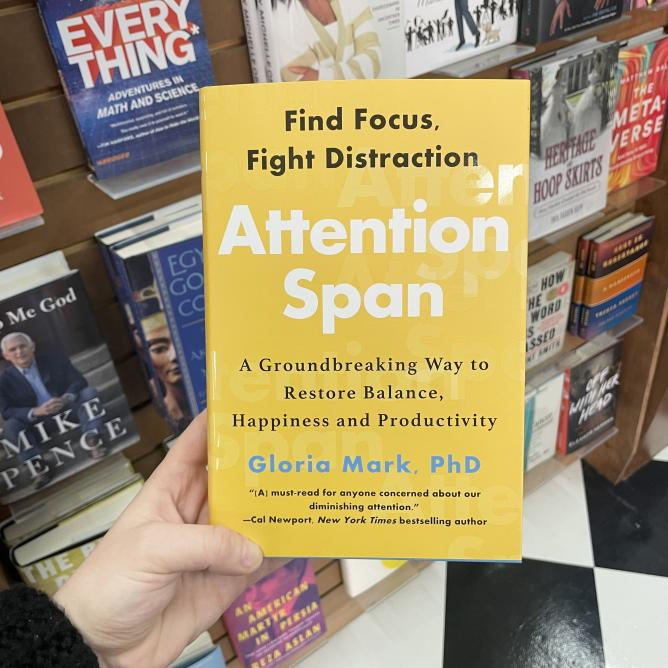
Gloria Mark’s latest book, “Attention Span: A Groundbreaking Way to Restore Balance, Happiness, and Productivity,” delves into the concept of soft determinism and how it relates to our attention spans. Soft determinism acknowledges that our actions are determined by a combination of factors, including our genetics, environment, and choices. This means that while we are not entirely free to do whatever we want, we still have some degree of control over our actions.

Mark’s research shows that our brains are constantly being bombarded with stimuli, and we have to make countless decisions every day. In this context, it can be helpful to view our actions as being determined, but not entirely out of our control. This perspective can help us to better understand our behavior and make positive changes in our lives.

One of the benefits of soft determinism is that it can help us to accept responsibility for our actions. By acknowledging the various factors that influence our behavior, we can be more compassionate towards ourselves and others. Soft determinism can also help us to take control of our lives by making intentional choices that align with our values and goals.

To improve our attention spans, Mark recommends making changes to our environment and habits. For example, we can reduce distractions by working in a quiet space or using noise-cancelling headphones. We can also improve our attention spans by taking regular breaks, practicing mindfulness, and avoiding multitasking.

Mark’s book provides helpful insights into the complex interplay between determinism and attention. She emphasizes the importance of focusing on the things that we can control and letting go of the things that we can’t. This can help us to cultivate a sense of inner peace and contentment, even in the midst of a busy and chaotic world.

In addition to discussing soft determinism, Mark also explores the benefits of attention in our lives. She argues that attention is essential for productivity, happiness, and well-being. When we are able to focus our attention on the task at hand, we are more likely to experience a sense of flow, or being fully immersed in what we are doing.

However, our attention spans are under constant threat from the many distractions in our environment. Mark cites research that shows that the average person checks their phone over 100 times a day. This constant stimulation can make it difficult to maintain focus and can lead to feelings of overwhelm and burnout.

To combat these challenges, Mark recommends developing a mindfulness practice. This can help us to become more aware of our thoughts and emotions, and to develop a greater sense of mental clarity and focus. Mark also encourages us to take breaks throughout the day to recharge our batteries and to make time for activities that bring us joy and fulfillment.

Mark’s book is a well-written and informative resource for anyone looking to improve their attention and overall well-being. Her research is sound, and her advice is practical and actionable. Whether you are struggling to focus at work, feeling overwhelmed by the demands of daily life, or simply looking to cultivate a greater sense of balance and peace, “Attention Span” is a must-read.

Soft determinism is not without its challenges, however. One of the main challenges is that it can be difficult to understand how our actions are determined. The process of determinism is complex and multifaceted, and it can be challenging to tease apart the various factors that influence our behavior.

Another challenge of soft determinism is that it can sometimes lead to feelings of fatalism. If we believe that our actions are predetermined and that we have no control over our lives, we may become resigned to our circumstances and give up on making positive changes.