The Law of Assumption

The Law of Assumption is a powerful concept that can transform your life by reshaping how you perceive and interact with the world. Popularized by Neville Goddard, this principle posits that whatever you assume to be true becomes your reality. By assuming the feeling of your desire already fulfilled, you align your thoughts and actions with that desired state, thus attracting it into your life.

Law of Assumption

Understanding the Law of Assumption

At its core, the Law of Assumption is about embodying the mindset and emotional state of already having achieved your goals. This concept hinges on the idea that our external reality is a reflection of our internal beliefs. By changing our assumptions, we can alter our reality.

Key Principles of the Law of Assumption:

  1. Assume the Desired State: Believe that your goal is already achieved. Feel the emotions associated with that achievement.
  2. Live from the End: Act and think as if your desired outcome is your current reality.
  3. Persist in the Assumption: Maintain this belief regardless of external circumstances or current reality.

To harness the Law of Assumption for career advancement, start by clearly defining your career goals. Whether you aim for a promotion, a new job, or success in your current role, visualize yourself in that position.

  1. Visualize Success: Close your eyes and imagine yourself in your desired role. See the office, feel the satisfaction, and experience the confidence.
  2. Embody the Role: Act as if you are already in that position. Dress the part, speak with authority, and take on responsibilities that align with your future role.
  3. Positive Affirmations: Use affirmations to reinforce your new belief. Phrases like “I am successful in my career” or “I am thriving in my dream job” can help solidify your new reality.

Applying the Law of Assumption to Wealth Creation

For wealth, the Law of Assumption requires you to shift your mindset from lack to abundance. Assume the feeling of financial freedom and prosperity.

Steps to Apply for Wealth:

  1. Visualize Abundance: Picture your bank account filled with money, imagine the freedom to buy what you want, and feel gratitude for your financial success.
  2. Financial Affirmations: Repeat affirmations like “I am wealthy,” “Money flows to me easily,” and “I am financially free.”
  3. Act Wealthy: Make financial decisions as if you are already wealthy. This doesn’t mean overspending but rather managing your finances wisely, investing in your growth, and making choices that reflect abundance.

Living from the End

Living from the end means embodying the state of your desired outcome. This requires a mental shift where you act, think, and feel as if you have already achieved your goals. By doing so, you align your actions with your beliefs, making it easier for your goals to manifest.

Tips for Living from the End:

  1. Daily Visualization: Spend a few minutes each day visualizing your desired outcome.
  2. Gratitude: Practice gratitude for what you have and what you are manifesting.
  3. Consistent Practice: Regularly reinforce your new beliefs and assumptions through meditation, journaling, and affirmations.

By incorporating the Law of Assumption into your daily routine, you can start living from the end and manifesting the career and wealth you desire. Remember, the power lies within your beliefs and assumptions. Start today and transform your reality.
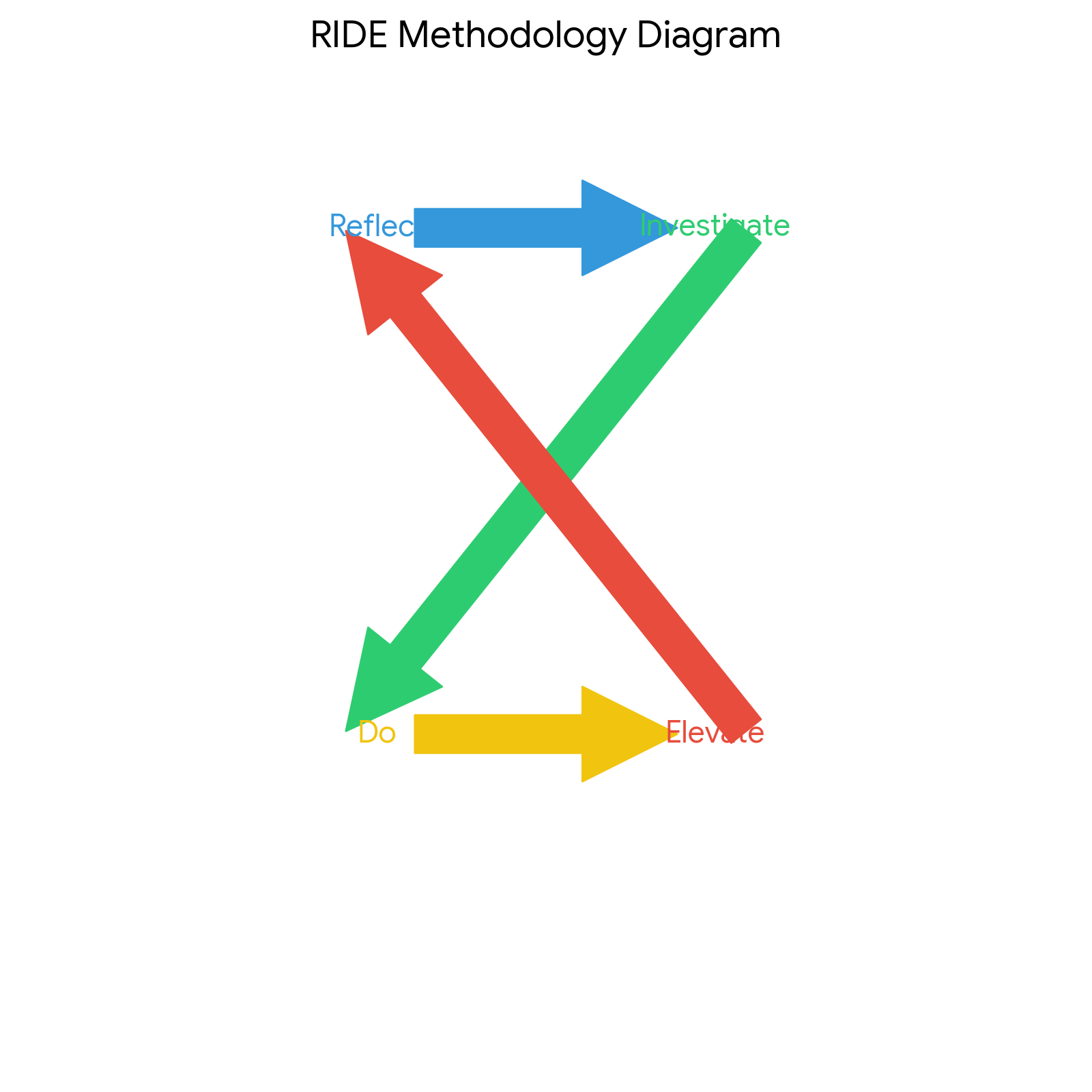
The RIDE methodology

Ever feel like your dreams are trapped behind a wall of obstacles, both seen and unseen? You’re not alone. But what if those obstacles could be transformed into stepping stones? The RIDE methodology unlocks the secret: Reflecting on your deepest desires, Investigating your blockers, Doing practical tasks for progress, and Elevating your future self. This infographic is your roadmap to self-improvement, showing you how RIDE can pave the way to a fulfilling future.

R: Reflect on Your Inner Compass Before embarking, pause and ask, “What truly matters to me?” Like Anna, who dreamt of becoming a renowned author, identify your burning desire. This, like Anna’s moment of clarity, is your guiding star. Remember, Lao Tzu reminds us, “The journey of a thousand miles begins with one step.” Yours starts with identifying your destination.

I: Investigate Your Inner Dragons No hero slays the dragon without understanding it. Here, face your “dragons” – those self-doubts, fears, or limiting beliefs that hinder your progress. Michael, a talented musician, discovered his dragon was stage fright, rooted in past failures. Only by acknowledging and confronting this fear could he conquer his stage and shine. Remember, as the Zen proverb says, “Obstacles do not block the path, they are the path.” Use them to grow stronger.

D: Do the Daily Dance of Progress Dreams are beautiful, but action is the bridge to reality. Divide your journey into small, actionable steps, like laying stones across a river. Sarah, who yearned to run a marathon, broke her goal into daily runs, gradually increasing the distance. Each step, like Sarah’s, is a victory, building strength and turning dreams into achievable goals. Channel Pablo Picasso’s wisdom: “Action is the foundational key to all success.” Take action, one step at a time.

E: Elevate Your Future Self Imagine your future self, successful and thriving. This vision, like John’s dream of leading his own startup, becomes your wind in the sails. It propels you forward, even through storms. Abraham Lincoln said, “The best way to predict your future is to create it.” So create your future, one step at a time.

The RIDE is More Than a Map, It’s a Philosophy RIDE isn’t just a strategy, it’s a way of life. Reflecting gives direction, investigating empowers you to overcome, doing builds momentum, and envisioning propels you forward. Remember, the journey itself holds the beauty, the growth, and the discoveries. As Ralph Waldo Emerson said, “Life is a journey, not a destination.” Embrace the RIDE, dear adventurer, and transform your path into a journey of endless possibility.

Embracing Criticism: The Art of Confidence and Inner Strength

Taking criticism personally is a common reaction that many of us have, but it is also a sign of immaturity. Truly confident people understand that there is nothing they can lose at the psychological and spiritual level when faced with criticism. They also recognize that others cannot affect their self-esteem because it is merely an illusion. By maintaining a calm, light, and graceful demeanor, these individuals inspire respect from those around them. In this blog post, we’ll explore the benefits of not taking criticism personally and how to cultivate this essential quality.

The Illusion of Self-Esteem

Self-esteem is often seen as a measure of our self-worth, and many people believe that it can be influenced by external factors such as others’ opinions. However, self-esteem is, in reality, an illusion. Our true worth comes from within, and it cannot be diminished by the words or actions of others. By recognizing that self-esteem is a construct, we can begin to detach ourselves from the need for validation and focus on developing our inner strength.

The Benefits of Not Taking Criticism Personally

  1. Improved personal growth: When we don’t take criticism personally, we can evaluate the feedback objectively and use it to grow and improve. This mindset allows us to learn from our mistakes and become better versions of ourselves.
  2. Enhanced relationships: By not taking criticism personally, we can communicate more effectively with others. This prevents misunderstandings and fosters healthier, more supportive relationships.
  3. Increased resilience: Developing a thick skin and not taking things personally makes us more resilient to life’s challenges. We become better equipped to handle setbacks and persevere in the face of adversity.
  4. Reduced stress and anxiety: Taking criticism personally can lead to stress and anxiety. By letting go of the need for approval and embracing constructive criticism, we can enjoy greater mental and emotional well-being.

How to Cultivate the Art of Not Taking Criticism Personally

  1. Practice self-awareness: Develop a deeper understanding of your emotions and thought patterns. This will help you recognize when you’re taking things personally and allow you to adjust your perspective accordingly.
  2. Seek self-improvement: Focus on becoming the best version of yourself. When you’re committed to personal growth, you’ll be more open to feedback and less likely to take criticism personally.
  3. Develop empathy: Understand that everyone has their own perspective and experiences that influence their opinions. When you develop empathy for others, you’ll be less likely to take their criticism personally.
  4. Adopt a growth mindset: Embrace the idea that you can always learn, grow, and improve. By adopting a growth mindset, you’ll be more open to criticism and able to use it as a tool for personal development.
  5. Surround yourself with supportive people: Choose to spend time with individuals who lift you up, rather than those who drag you down. A supportive network can help you maintain a healthy perspective on criticism.

Taking criticism personally is a sign of immaturity, and it hinders our personal growth. By recognizing that self-esteem is an illusion and embracing a growth mindset, we can learn to face criticism with grace and confidence. This shift in perspective enables us to foster healthier relationships, become more resilient, and ultimately lead happier, more fulfilling lives. It’s time to stop taking things personally and start embracing the power of constructive criticism.