The RIDE methodology

Ever feel like your dreams are trapped behind a wall of obstacles, both seen and unseen? You’re not alone. But what if those obstacles could be transformed into stepping stones? The RIDE methodology unlocks the secret: Reflecting on your deepest desires, Investigating your blockers, Doing practical tasks for progress, and Elevating your future self. This infographic is your roadmap to self-improvement, showing you how RIDE can pave the way to a fulfilling future.
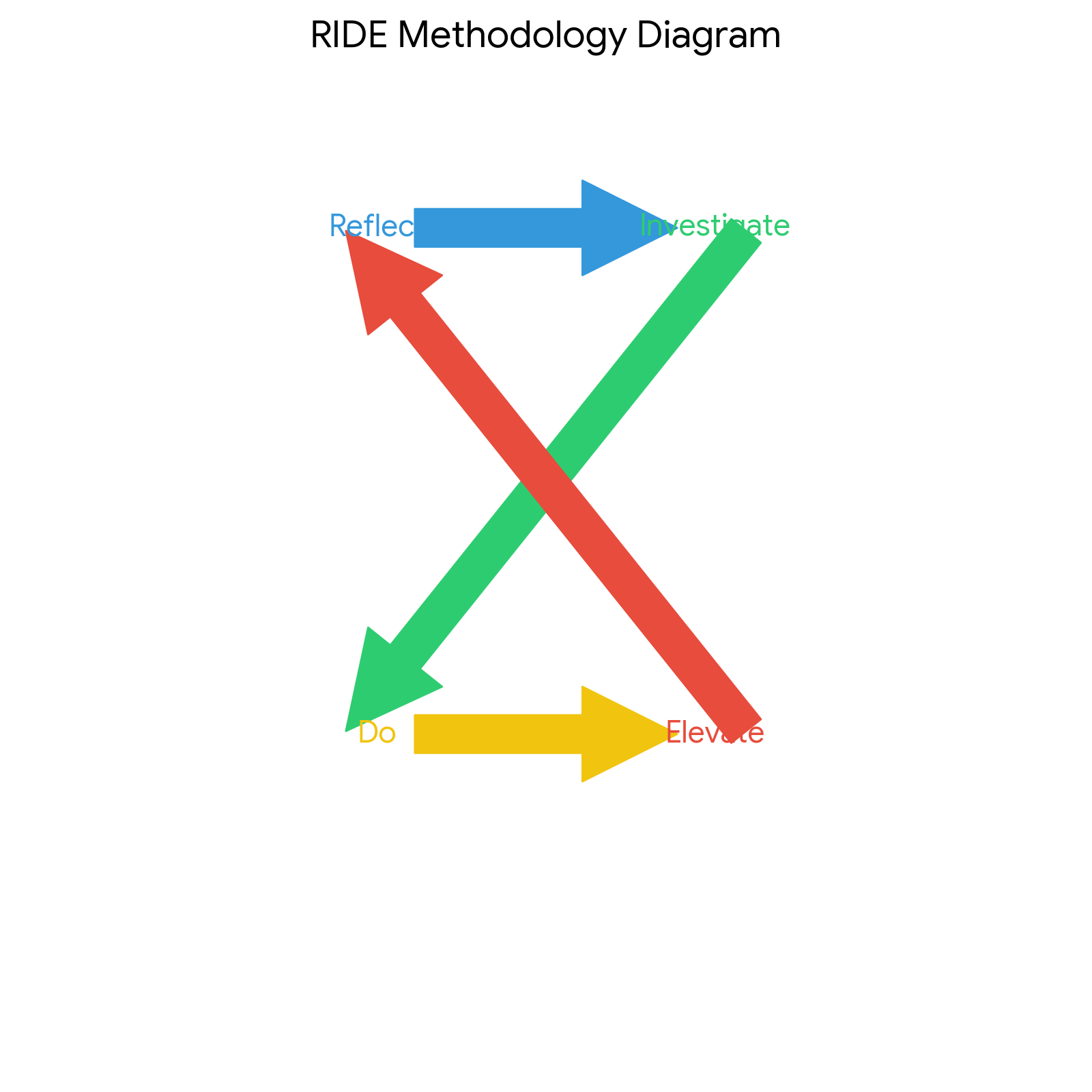
R: Reflect on Your Inner Compass Before embarking, pause and ask, “What truly matters to me?” Like Anna, who dreamt of becoming a renowned author, identify your burning desire. This, like Anna’s moment of clarity, is your guiding star. Remember, Lao Tzu reminds us, “The journey of a thousand miles begins with one step.” Yours starts with identifying your destination.

I: Investigate Your Inner Dragons No hero slays the dragon without understanding it. Here, face your “dragons” – those self-doubts, fears, or limiting beliefs that hinder your progress. Michael, a talented musician, discovered his dragon was stage fright, rooted in past failures. Only by acknowledging and confronting this fear could he conquer his stage and shine. Remember, as the Zen proverb says, “Obstacles do not block the path, they are the path.” Use them to grow stronger.

D: Do the Daily Dance of Progress Dreams are beautiful, but action is the bridge to reality. Divide your journey into small, actionable steps, like laying stones across a river. Sarah, who yearned to run a marathon, broke her goal into daily runs, gradually increasing the distance. Each step, like Sarah’s, is a victory, building strength and turning dreams into achievable goals. Channel Pablo Picasso’s wisdom: “Action is the foundational key to all success.” Take action, one step at a time.

E: Elevate Your Future Self Imagine your future self, successful and thriving. This vision, like John’s dream of leading his own startup, becomes your wind in the sails. It propels you forward, even through storms. Abraham Lincoln said, “The best way to predict your future is to create it.” So create your future, one step at a time.

The RIDE is More Than a Map, It’s a Philosophy RIDE isn’t just a strategy, it’s a way of life. Reflecting gives direction, investigating empowers you to overcome, doing builds momentum, and envisioning propels you forward. Remember, the journey itself holds the beauty, the growth, and the discoveries. As Ralph Waldo Emerson said, “Life is a journey, not a destination.” Embrace the RIDE, dear adventurer, and transform your path into a journey of endless possibility.
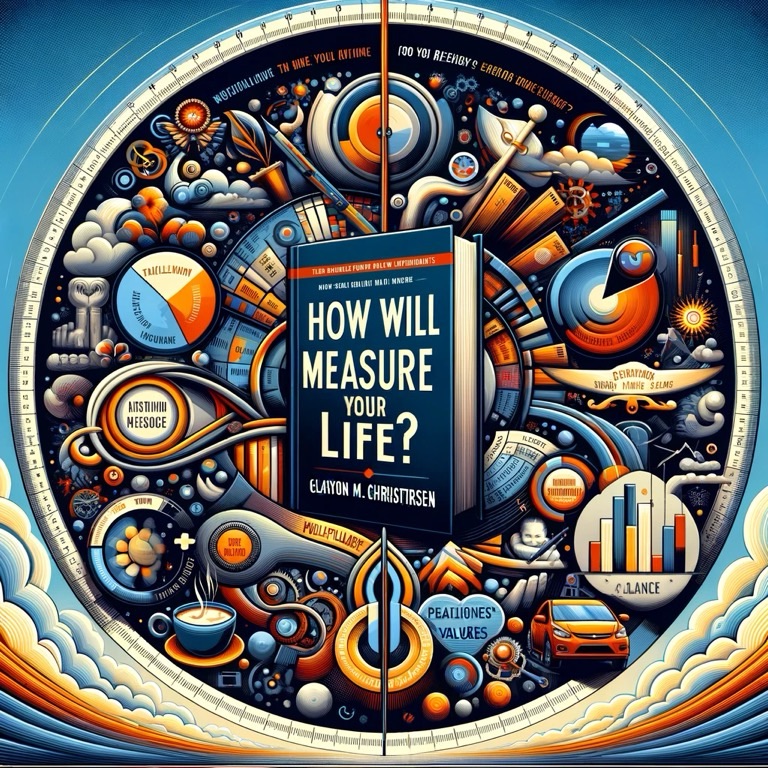
How will you measure your life?

Balancing Achievement and Fulfillment:
Christensen’s work emphasizes the delicate balance between career achievement and personal fulfillment. He suggests that while professional accomplishments are measurable and visible, personal satisfaction is often less tangible but equally important. The key lies in defining what success truly means on a personal level and aligning it with one’s professional goals.

How will you measure your life?

Investing in Relationships:
One of the central tenets of Christensen’s book is the significance of investing in relationships. He argues that strong personal relationships are the most substantial source of long-term happiness. For executives, this might mean reevaluating priorities to ensure that relationships with family, friends, and community are nurtured alongside career aspirations.

The Danger of Marginal Thinking:
Christensen cautions against marginal thinking – making decisions based on short-term gains rather than long-term values. This approach can lead to compromises in both personal integrity and life goals. For leaders, maintaining a steadfast focus on core values and long-term objectives is crucial for true success.

The Motivation Factor:
Understanding what motivates us is another critical aspect. Christensen points out that motivation often comes from intrinsic rewards – the sense of satisfaction from the work itself – rather than extrinsic rewards like money or status. Leaders need to identify what intrinsically motivates them and their teams to foster a fulfilling work environment.

Creating a Personal Strategy:
The concept of developing a personal strategy is pivotal in Christensen’s philosophy. Just as businesses require strategic planning to thrive, individuals need personal strategies to achieve their life goals. This involves setting clear objectives, understanding the resources available, and regularly reviewing and adjusting these plans.


“How Will You Measure Your Life?” offers a reflective and strategic approach to life’s biggest decisions. For executives and leaders, Christensen’s insights provide a framework for aligning professional achievements with personal fulfillment. By focusing on what truly matters, leaders can navigate their lives with purpose and satisfaction, creating a legacy that transcends professional success. This book is not just a guide to living but a reminder of the values that define a truly successful life.

Red Car Theory

Have you heard of Red car Theory? In the realm of human perception, the “Red Car Theory” serves as a fascinating example of how our focus shapes our reality. This concept, often used in psychological and motivational contexts, illustrates how our attention, once fixated on a specific object or idea, begins to notice it more frequently in our environment. This blog explores the Red Car Theory, interweaving it with relevant analogies and quotes, and highlighting its implications in various aspects of life.

Red Car Theory

The Essence of the Red Car Phenomenon

Imagine deciding to buy a red car. Suddenly, you start noticing red cars everywhere. Were they always there? Yes, but your attention to them wasn’t. This is the crux of the Red Car Theory. It’s not that there are more red cars; it’s your awareness that has shifted.

As Henry Ford famously said, “Whether you think you can, or you think you can’t – you’re right.” This quote underscores the power of focus and how it shapes our perception of reality.

“Whether you think you can, or you think you can’t – you’re right.”

Henry Ford

Selective Awareness and Its Impact

The Red Car Theory is essentially about selective awareness. Once something is on our radar, our brain unconsciously seeks it out, creating a bias in our perception. This phenomenon extends beyond mere physical objects to ideas, emotions, and even opportunities.

Consider the words of Marcus Aurelius: “Our life is what our thoughts make it.” This ancient wisdom resonates with the Red Car Theory, emphasizing how our focused thoughts can shape our experiences and interactions.

Implications in Everyday Life and Business

In personal and professional settings, understanding and harnessing this theory can be transformative. For leaders and executives, focusing on positive outcomes and opportunities can create a self-fulfilling prophecy, where the sought-after results become more apparent and attainable.

As Oprah Winfrey insightfully puts it, “You get in life what you have the courage to ask for.” This speaks to the idea of aligning our focus with our goals, thereby making them more attainable.

“You get in life what you have the courage to ask for.”

Oprah Winfrey

The Red Car Theory serves as a potent reminder of the power of our focus. By understanding and applying this concept, we can navigate our lives and careers with greater awareness and efficacy, shaping our reality in alignment with our aspirations.