The RIDE methodology

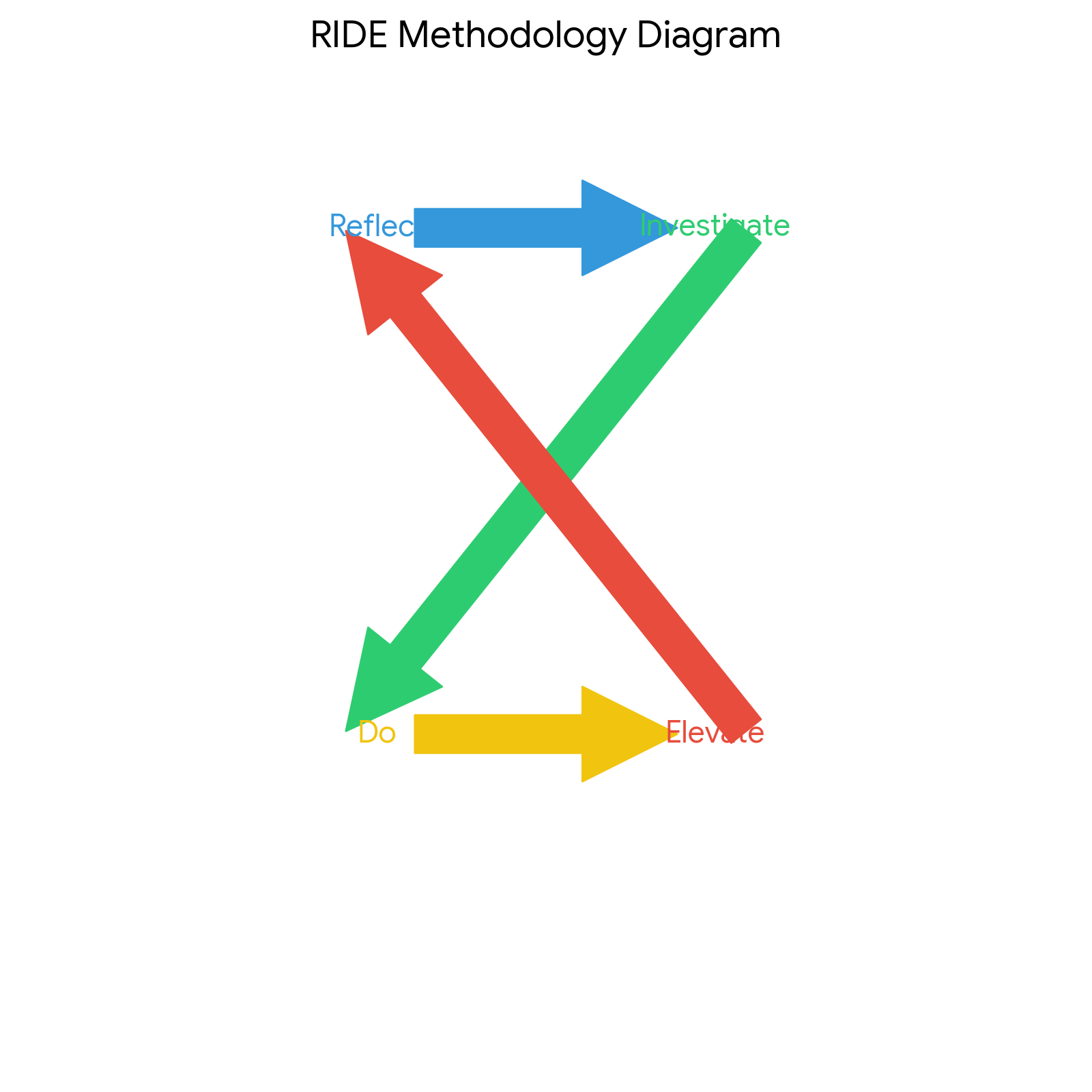
Ever feel like your dreams are trapped behind a wall of obstacles, both seen and unseen? You’re not alone. But what if those obstacles could be transformed into stepping stones? The RIDE methodology unlocks the secret: Reflecting on your deepest desires, Investigating your blockers, Doing practical tasks for progress, and Elevating your future self. This infographic is your roadmap to self-improvement, showing you how RIDE can pave the way to a fulfilling future.

R: Reflect on Your Inner Compass Before embarking, pause and ask, “What truly matters to me?” Like Anna, who dreamt of becoming a renowned author, identify your burning desire. This, like Anna’s moment of clarity, is your guiding star. Remember, Lao Tzu reminds us, “The journey of a thousand miles begins with one step.” Yours starts with identifying your destination.

I: Investigate Your Inner Dragons No hero slays the dragon without understanding it. Here, face your “dragons” – those self-doubts, fears, or limiting beliefs that hinder your progress. Michael, a talented musician, discovered his dragon was stage fright, rooted in past failures. Only by acknowledging and confronting this fear could he conquer his stage and shine. Remember, as the Zen proverb says, “Obstacles do not block the path, they are the path.” Use them to grow stronger.

D: Do the Daily Dance of Progress Dreams are beautiful, but action is the bridge to reality. Divide your journey into small, actionable steps, like laying stones across a river. Sarah, who yearned to run a marathon, broke her goal into daily runs, gradually increasing the distance. Each step, like Sarah’s, is a victory, building strength and turning dreams into achievable goals. Channel Pablo Picasso’s wisdom: “Action is the foundational key to all success.” Take action, one step at a time.

E: Elevate Your Future Self Imagine your future self, successful and thriving. This vision, like John’s dream of leading his own startup, becomes your wind in the sails. It propels you forward, even through storms. Abraham Lincoln said, “The best way to predict your future is to create it.” So create your future, one step at a time.

The RIDE is More Than a Map, It’s a Philosophy RIDE isn’t just a strategy, it’s a way of life. Reflecting gives direction, investigating empowers you to overcome, doing builds momentum, and envisioning propels you forward. Remember, the journey itself holds the beauty, the growth, and the discoveries. As Ralph Waldo Emerson said, “Life is a journey, not a destination.” Embrace the RIDE, dear adventurer, and transform your path into a journey of endless possibility.

Cynics vs. Optimists

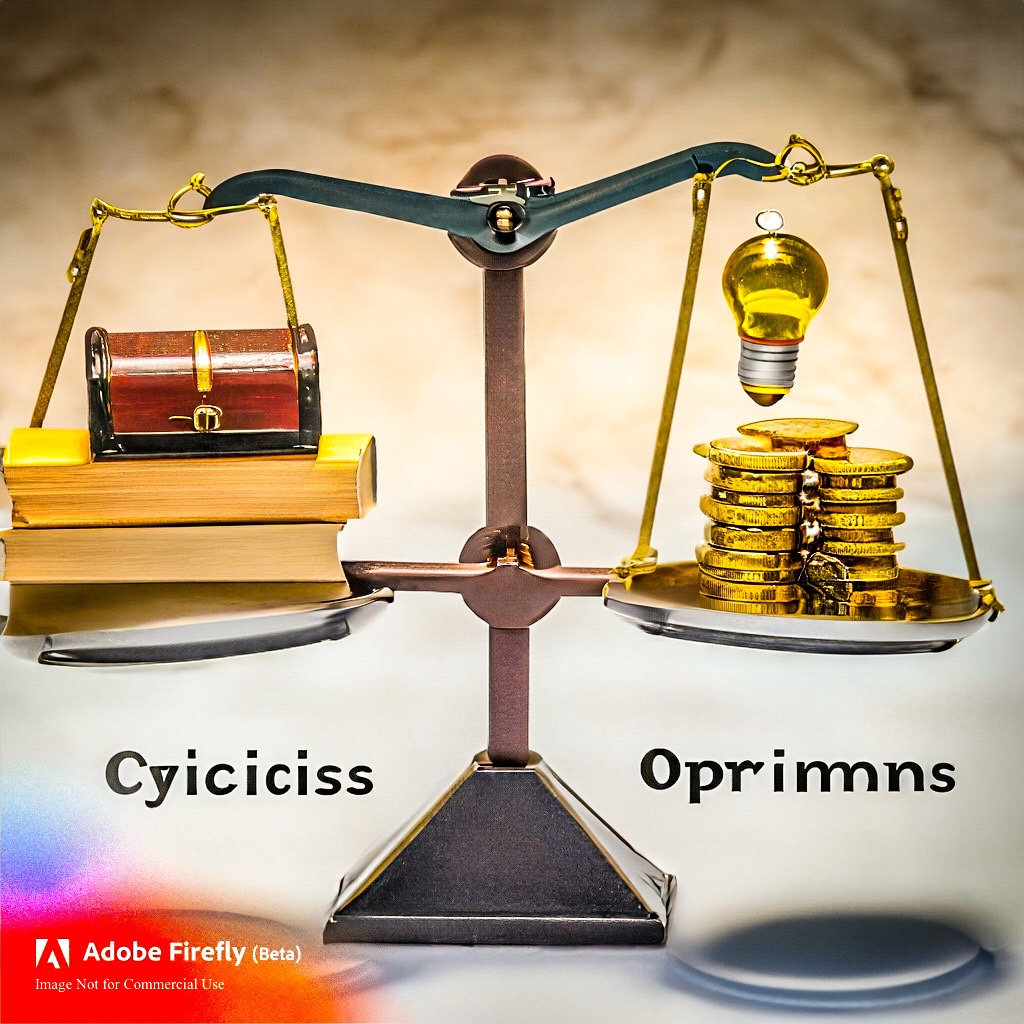
In the realm of business, leadership, and personal growth, there exists a perpetual tug-of-war between two contrasting perspectives: cynicism and optimism. The dichotomy is elegantly captured in the statement: “Cynics get to be right, and optimists get to be rich.” This sentence encapsulates not just a difference in outlook but also suggests a consequential impact on success. Let’s delve into the nuanced implications of being a cynic or an optimist, drawing on real-life anecdotes and thought-provoking quotes from renowned individuals.

Cynics VS Optimists

The Righteous Cynic

Cynicism often presents itself as a form of intellectual sophistication. Cynics pride themselves on their ability to see through facades and question the status quo. Warren Buffet once said, “Risk comes from not knowing what you’re doing.” Cynics argue that their critical mindset minimizes risk as they understand the world more clearly than their optimistic counterparts.

During the Dot-Com bubble of the late ’90s, a significant number of investors were swept up by unwarranted optimism. Cynics, on the other hand, warned about the unsustainability of businesses with no concrete revenue model. When the bubble burst, the cynics found themselves vindicated. They were “right,” but their caution had also held them back from other lucrative opportunities.

The Affluent Optimist

In stark contrast to cynics, optimists thrive on possibility and potential. They often see setbacks as temporary and treat failures as stepping stones to success. Henry Ford remarked, “Whether you think you can or you think you can’t, you’re right.” For optimists, the belief in oneself and in favorable outcomes fuels success, and more often than not, leads to financial gain.

Elon Musk’s venture into private space exploration through SpaceX is a prime example of optimism at work. Many considered the privatization of space travel a quixotic endeavor. Despite early failures and widespread skepticism, Musk’s unwavering optimism led to revolutionary advancements, including the reusable Falcon 9 rocket. Today, SpaceX stands as a testament to the affluence that optimism can yield.

The Balanced Perspective: Realist Optimism

While cynicism and optimism represent opposite ends of a spectrum, many successful leaders suggest a balanced approach—realist optimism. Bill Gates once shared, “Most people overestimate what they can do in one year and underestimate what they can do in ten years.” This perspective embodies a mixture of critical evaluation and long-term optimism.

In the world of investment, many hedge funds adopt a strategy of ‘hedging’ that combines both optimistic and cynical approaches. By diversifying assets and leveraging data analytics, they maximize gains while minimizing losses, demonstrating the efficacy of a balanced mindset.

The debate between cynicism and optimism is more than a philosophical divergence; it has real-world implications for success and wealth accumulation. While cynics often find their perspectives validated, they may miss out on expansive opportunities. Optimists, buoyed by a belief in positive outcomes, frequently achieve financial affluence even if they stumble along the way. The most effective leaders understand that a balance between the two—realist optimism—offers the most sustainable path to success. As you navigate your professional journey, consider which mindset serves you best in your quest for either righteousness or affluence—or perhaps, a harmonious blend of both.

The Burnt Toast Theory

The Burnt Toast Theory is an intriguing concept that proposes we should learn to accept imperfection and appreciate the small things in life. According to this theory, when we accidentally burn a slice of toast, we should simply scrape off the burnt part and enjoy the rest, recognizing that although it may not be perfect, it is still edible and enjoyable. This philosophy can be applied to various aspects of life, reminding us to find happiness in the imperfect moments and accept that things may not always go as planned.

Popularized by renowned author and motivational speaker Teri Garr in her book “Speedbumps: Flooring it through Hollywood,” the Burnt Toast Theory encourages us to embrace the reality of our lives and let go of unrealistic expectations. It highlights that while society often places a high value on perfection and success, imperfection can be just as beautiful and meaningful. By accepting our flaws and enjoying the small things, we can find fulfillment in life’s imperfect moments.

As experienced professionals, we may encounter situations where things do not go as planned or where we make mistakes. The Burnt Toast Theory serves as a powerful reminder that we should not be too hard on ourselves or let setbacks hold us back. Instead, we should scrape off the burnt parts, learn from our mistakes, and move forward. By doing so, we can find joy in even the most challenging situations and approach life with a more positive and resilient mindset.

In conclusion, the Burnt Toast Theory is a simple but powerful concept that can have a profound impact on how we approach life. By embracing imperfection and finding happiness in the small things, we can live a more fulfilling and meaningful life, both professionally and personally.