The Power of Attention

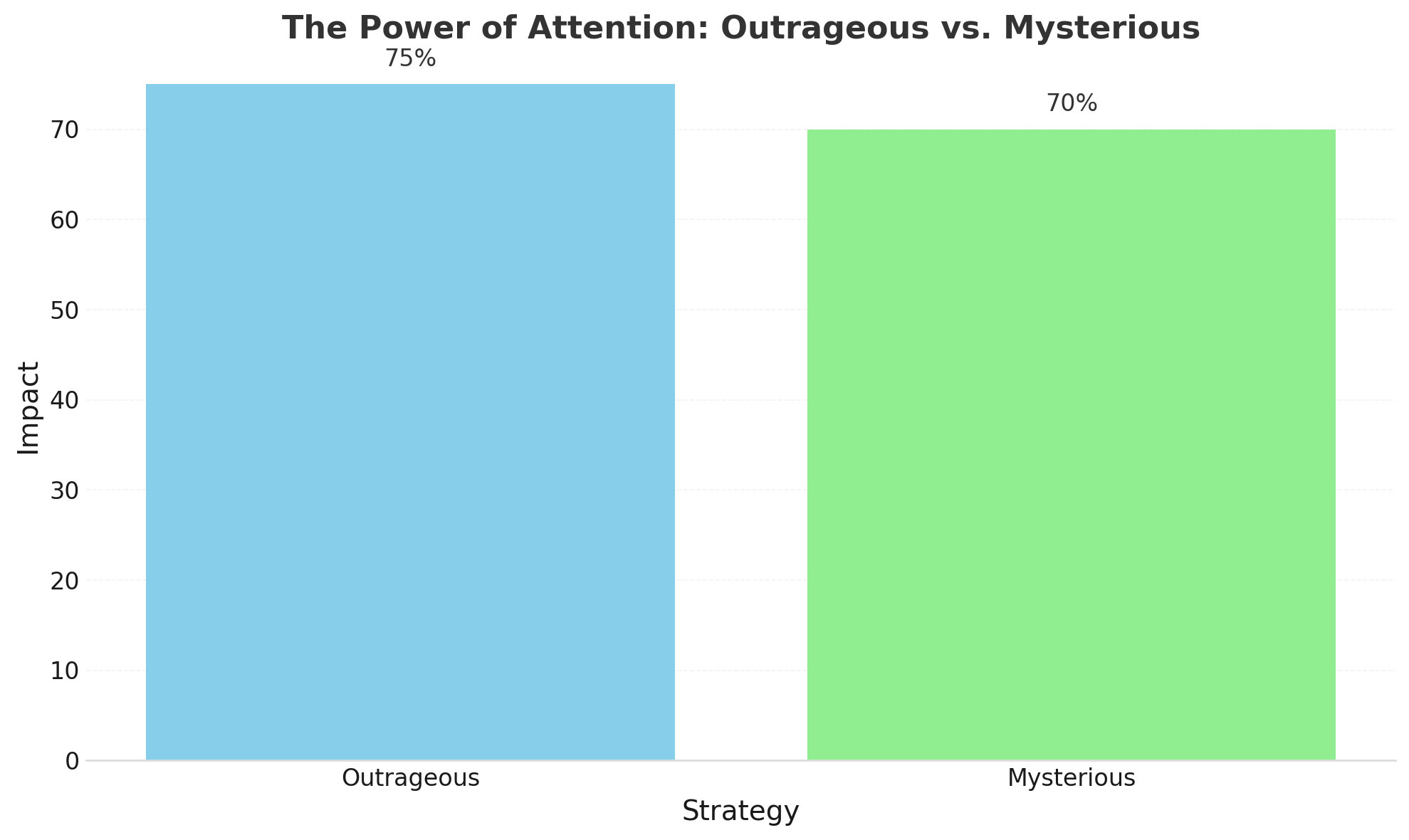
In today’s fast-paced, information-saturated world, capturing and maintaining attention has become a valuable currency. Whether you’re an entrepreneur, artist, or influencer, your ability to stand out from the crowd can make or break your success. This is where Law 6 comes into play: Attract Attention by being outrageous or creating an aura of mystery.
The Attention Economy

We live in an attention economy, where the most precious commodity is not money or resources, but the ability to capture and hold people’s focus. With countless stimuli vying for our attention every second, those who can cut through the noise and make a lasting impression are the ones who ultimately succeed.

The Power of Being Outrageous

One effective way to attract attention is by being outrageous. This doesn’t mean you should be offensive or harmful, but rather that you should push boundaries and challenge conventions in a way that makes people take notice. Think of figures like Lady Gaga, Elon Musk, or Richard Branson – their unconventional approaches and bold statements have kept them in the public eye and contributed to their success.

Being outrageous can involve:

  1. Making bold claims or predictions
  2. Adopting an unusual personal style
  3. Taking on seemingly impossible challenges
  4. Speaking out on controversial topics
  5. Creating products or experiences that defy expectations

The Allure of Mystery

On the other hand, cultivating an air of mystery can be equally effective in attracting attention. Human curiosity is a powerful force, and people are naturally drawn to what they don’t fully understand. By strategically withholding information or creating an enigmatic persona, you can pique interest and keep people engaged.

Ways to create mystery include:

  1. Teasing upcoming projects or announcements
  2. Maintaining a low profile on social media
  3. Crafting an intriguing personal narrative
  4. Using symbolism or hidden meanings in your work
  5. Leaving certain aspects of your life or business open to interpretation

The Value of Any Attention

It’s important to note that, according to this law, any attention – positive or negative – is better than being ignored. While it’s generally preferable to attract positive attention, even controversy or criticism can work in your favor by keeping you in the public eye and sparking discussions around your brand or persona.

However, it’s crucial to navigate this carefully. While negative attention can initially boost visibility, it’s essential to have a strategy for turning it into a positive narrative or leveraging it for growth.

Attention Leads to Wealth

The ultimate goal of attracting attention is to convert it into tangible benefits, often in the form of wealth. When you successfully capture people’s interest, you open doors to numerous opportunities:

  1. Increased brand recognition and loyalty
  2. Higher engagement rates on social media and other platforms
  3. More opportunities for collaborations and partnerships
  4. Greater media coverage and free publicity
  5. Improved sales and revenue streams

In a world where attention is increasingly scarce and valuable, mastering the art of attracting and maintaining it can be a game-changer for your personal and professional success. Whether you choose to be outrageous, mysterious, or a combination of both, remember that the key is to be authentic and strategic in your approach.

By implementing Law 6 and making yourself impossible to ignore, you can harness the power of attention to create wealth, influence, and lasting impact in your chosen field. Just remember to use this power responsibly and always strive to provide value to your audience, even as you captivate their attention.
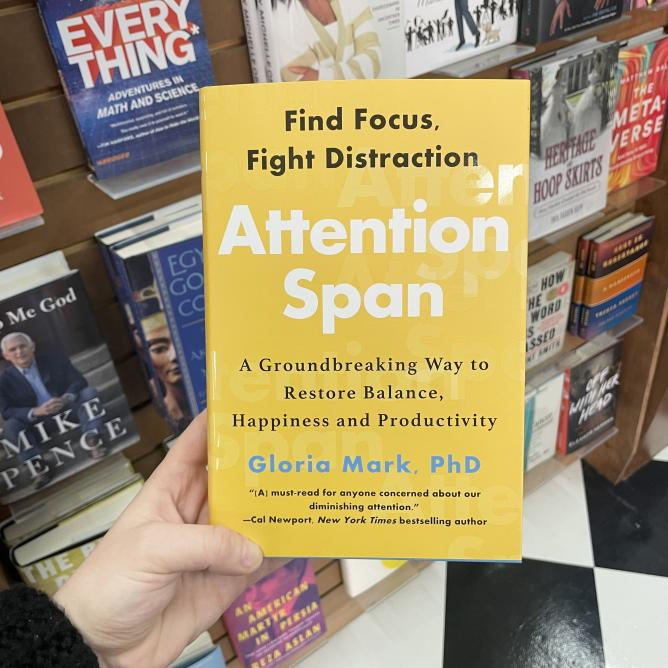
Unlock Your Productivity and Take Control with Soft Determinism: The Attention Span Revolution!

Gloria Mark’s latest book, “Attention Span: A Groundbreaking Way to Restore Balance, Happiness, and Productivity,” delves into the concept of soft determinism and how it relates to our attention spans. Soft determinism acknowledges that our actions are determined by a combination of factors, including our genetics, environment, and choices. This means that while we are not entirely free to do whatever we want, we still have some degree of control over our actions.

Mark’s research shows that our brains are constantly being bombarded with stimuli, and we have to make countless decisions every day. In this context, it can be helpful to view our actions as being determined, but not entirely out of our control. This perspective can help us to better understand our behavior and make positive changes in our lives.

One of the benefits of soft determinism is that it can help us to accept responsibility for our actions. By acknowledging the various factors that influence our behavior, we can be more compassionate towards ourselves and others. Soft determinism can also help us to take control of our lives by making intentional choices that align with our values and goals.

To improve our attention spans, Mark recommends making changes to our environment and habits. For example, we can reduce distractions by working in a quiet space or using noise-cancelling headphones. We can also improve our attention spans by taking regular breaks, practicing mindfulness, and avoiding multitasking.

Mark’s book provides helpful insights into the complex interplay between determinism and attention. She emphasizes the importance of focusing on the things that we can control and letting go of the things that we can’t. This can help us to cultivate a sense of inner peace and contentment, even in the midst of a busy and chaotic world.

In addition to discussing soft determinism, Mark also explores the benefits of attention in our lives. She argues that attention is essential for productivity, happiness, and well-being. When we are able to focus our attention on the task at hand, we are more likely to experience a sense of flow, or being fully immersed in what we are doing.

However, our attention spans are under constant threat from the many distractions in our environment. Mark cites research that shows that the average person checks their phone over 100 times a day. This constant stimulation can make it difficult to maintain focus and can lead to feelings of overwhelm and burnout.

To combat these challenges, Mark recommends developing a mindfulness practice. This can help us to become more aware of our thoughts and emotions, and to develop a greater sense of mental clarity and focus. Mark also encourages us to take breaks throughout the day to recharge our batteries and to make time for activities that bring us joy and fulfillment.

Mark’s book is a well-written and informative resource for anyone looking to improve their attention and overall well-being. Her research is sound, and her advice is practical and actionable. Whether you are struggling to focus at work, feeling overwhelmed by the demands of daily life, or simply looking to cultivate a greater sense of balance and peace, “Attention Span” is a must-read.

Soft determinism is not without its challenges, however. One of the main challenges is that it can be difficult to understand how our actions are determined. The process of determinism is complex and multifaceted, and it can be challenging to tease apart the various factors that influence our behavior.

Another challenge of soft determinism is that it can sometimes lead to feelings of fatalism. If we believe that our actions are predetermined and that we have no control over our lives, we may become resigned to our circumstances and give up on making positive changes.