Embracing Criticism: The Art of Confidence and Inner Strength

Taking criticism personally is a common reaction that many of us have, but it is also a sign of immaturity. Truly confident people understand that there is nothing they can lose at the psychological and spiritual level when faced with criticism. They also recognize that others cannot affect their self-esteem because it is merely an illusion. By maintaining a calm, light, and graceful demeanor, these individuals inspire respect from those around them. In this blog post, we’ll explore the benefits of not taking criticism personally and how to cultivate this essential quality.

The Illusion of Self-Esteem

Self-esteem is often seen as a measure of our self-worth, and many people believe that it can be influenced by external factors such as others’ opinions. However, self-esteem is, in reality, an illusion. Our true worth comes from within, and it cannot be diminished by the words or actions of others. By recognizing that self-esteem is a construct, we can begin to detach ourselves from the need for validation and focus on developing our inner strength.

The Benefits of Not Taking Criticism Personally

  1. Improved personal growth: When we don’t take criticism personally, we can evaluate the feedback objectively and use it to grow and improve. This mindset allows us to learn from our mistakes and become better versions of ourselves.
  2. Enhanced relationships: By not taking criticism personally, we can communicate more effectively with others. This prevents misunderstandings and fosters healthier, more supportive relationships.
  3. Increased resilience: Developing a thick skin and not taking things personally makes us more resilient to life’s challenges. We become better equipped to handle setbacks and persevere in the face of adversity.
  4. Reduced stress and anxiety: Taking criticism personally can lead to stress and anxiety. By letting go of the need for approval and embracing constructive criticism, we can enjoy greater mental and emotional well-being.

How to Cultivate the Art of Not Taking Criticism Personally

  1. Practice self-awareness: Develop a deeper understanding of your emotions and thought patterns. This will help you recognize when you’re taking things personally and allow you to adjust your perspective accordingly.
  2. Seek self-improvement: Focus on becoming the best version of yourself. When you’re committed to personal growth, you’ll be more open to feedback and less likely to take criticism personally.
  3. Develop empathy: Understand that everyone has their own perspective and experiences that influence their opinions. When you develop empathy for others, you’ll be less likely to take their criticism personally.
  4. Adopt a growth mindset: Embrace the idea that you can always learn, grow, and improve. By adopting a growth mindset, you’ll be more open to criticism and able to use it as a tool for personal development.
  5. Surround yourself with supportive people: Choose to spend time with individuals who lift you up, rather than those who drag you down. A supportive network can help you maintain a healthy perspective on criticism.

Taking criticism personally is a sign of immaturity, and it hinders our personal growth. By recognizing that self-esteem is an illusion and embracing a growth mindset, we can learn to face criticism with grace and confidence. This shift in perspective enables us to foster healthier relationships, become more resilient, and ultimately lead happier, more fulfilling lives. It’s time to stop taking things personally and start embracing the power of constructive criticism.

Advertisement
Privacy Settings

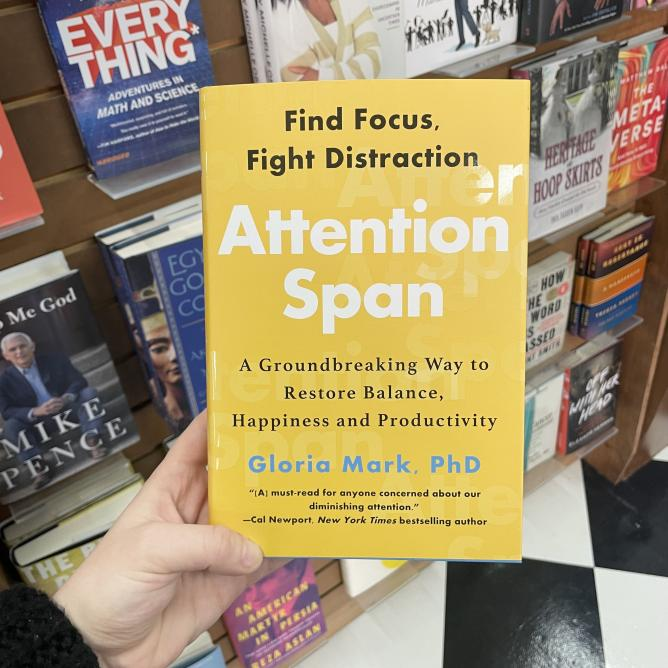
Unlock Your Productivity and Take Control with Soft Determinism: The Attention Span Revolution!

Gloria Mark’s latest book, “Attention Span: A Groundbreaking Way to Restore Balance, Happiness, and Productivity,” delves into the concept of soft determinism and how it relates to our attention spans. Soft determinism acknowledges that our actions are determined by a combination of factors, including our genetics, environment, and choices. This means that while we are not entirely free to do whatever we want, we still have some degree of control over our actions.

Mark’s research shows that our brains are constantly being bombarded with stimuli, and we have to make countless decisions every day. In this context, it can be helpful to view our actions as being determined, but not entirely out of our control. This perspective can help us to better understand our behavior and make positive changes in our lives.

One of the benefits of soft determinism is that it can help us to accept responsibility for our actions. By acknowledging the various factors that influence our behavior, we can be more compassionate towards ourselves and others. Soft determinism can also help us to take control of our lives by making intentional choices that align with our values and goals.

To improve our attention spans, Mark recommends making changes to our environment and habits. For example, we can reduce distractions by working in a quiet space or using noise-cancelling headphones. We can also improve our attention spans by taking regular breaks, practicing mindfulness, and avoiding multitasking.

Mark’s book provides helpful insights into the complex interplay between determinism and attention. She emphasizes the importance of focusing on the things that we can control and letting go of the things that we can’t. This can help us to cultivate a sense of inner peace and contentment, even in the midst of a busy and chaotic world.

In addition to discussing soft determinism, Mark also explores the benefits of attention in our lives. She argues that attention is essential for productivity, happiness, and well-being. When we are able to focus our attention on the task at hand, we are more likely to experience a sense of flow, or being fully immersed in what we are doing.

However, our attention spans are under constant threat from the many distractions in our environment. Mark cites research that shows that the average person checks their phone over 100 times a day. This constant stimulation can make it difficult to maintain focus and can lead to feelings of overwhelm and burnout.

To combat these challenges, Mark recommends developing a mindfulness practice. This can help us to become more aware of our thoughts and emotions, and to develop a greater sense of mental clarity and focus. Mark also encourages us to take breaks throughout the day to recharge our batteries and to make time for activities that bring us joy and fulfillment.

Mark’s book is a well-written and informative resource for anyone looking to improve their attention and overall well-being. Her research is sound, and her advice is practical and actionable. Whether you are struggling to focus at work, feeling overwhelmed by the demands of daily life, or simply looking to cultivate a greater sense of balance and peace, “Attention Span” is a must-read.

Soft determinism is not without its challenges, however. One of the main challenges is that it can be difficult to understand how our actions are determined. The process of determinism is complex and multifaceted, and it can be challenging to tease apart the various factors that influence our behavior.

Another challenge of soft determinism is that it can sometimes lead to feelings of fatalism. If we believe that our actions are predetermined and that we have no control over our lives, we may become resigned to our circumstances and give up on making positive changes.

The Art of Simplification: Breaking Down Complex Topics

In a world overflowing with information, the ability to communicate effectively has become increasingly important. Great communicators possess the unique skill of taking complex topics and making them simple to understand. This blog will explore the characteristics of effective communicators, as well as techniques to help you simplify complex information. By mastering the art of simplification, you can enhance your communication skills and become a more influential, persuasive speaker.

The Power of Simplification: Simplifying complex information is an essential aspect of effective communication.

  • When information is presented in a clear, concise manner, the audience is more likely to grasp and retain the message.
  • Simplification fosters understanding, enabling people to make informed decisions and solve problems more effectively.
  • By breaking down complex topics, great communicators can make information accessible to a wider audience, bridging knowledge gaps and promoting collaboration.

Characteristics of Great Communicators: Great communicators are patient and empathetic, taking the time to understand their audience’s needs and perspectives.

  • They possess exceptional listening skills, which allow them to gauge their audience’s comprehension and adjust their message accordingly.
  • An ability to think critically and analytically enables them to distill complex ideas into simpler, more digestible concepts.
  • They are skilled storytellers, using relatable examples and metaphors to illustrate abstract ideas.
  • Great communicators are adaptable, adjusting their communication style to suit the situation and audience.

Techniques for Simplifying Complex Topics:

  • Know Your Audience:
  • Tailor your message to the audience’s level of understanding and familiarity with the topic.
  • Use language and terminology that your audience can comprehend, avoiding jargon and technical terms when possible.
  • Break It Down:
  • Deconstruct complex ideas into smaller, more manageable components.
  • Explain each component in a logical, sequential manner to help your audience build a comprehensive understanding of the topic.
  • Use Analogies and Metaphors:
  • Analogies and metaphors are powerful tools for explaining complex concepts by drawing parallels with familiar, everyday experiences.
  • Choose analogies that resonate with your audience, ensuring they are relatable and easily understood.
  • Tell a Story:
  • Stories are an effective way to convey information and make it memorable.
  • Weave a narrative around the complex topic, using real-life examples or hypothetical scenarios to bring the information to life.
  • Utilize Visual Aids:
  • Visual aids, such as diagrams, charts, and infographics, can help simplify complex information by presenting it in a more accessible format.
  • Use visuals to highlight key points, illustrate relationships between concepts, or demonstrate processes.
  • Encourage Interaction:
  • Engage your audience by asking questions, soliciting opinions, or inviting them to share their experiences.
  • Interaction promotes understanding, as it encourages the audience to actively process and internalize the information being presented.
  • Be Patient and Receptive to Feedback:
  • Recognize that complex topics may require additional explanation or clarification.
  • Be patient with your audience, and be open to their questions and feedback to ensure they fully comprehend the information.

Becoming a great communicator requires practice and dedication, as well as a commitment to mastering the art of simplification. By employing the techniques discussed in this blog, you can break down complex topics and make them more accessible, engaging, and memorable for your audience. As you hone your communication skills and learn to simplify complex information, you’ll find that your ability to connect with others, share ideas, and influence decisions will grow exponentially.

%d bloggers like this: