Strategic Thinking

In the ever-evolving world of business, the ability to think strategically is paramount. One useful tool in this endeavor is the ‘Strategic Thinking MicroSkill Cheat Sheet’. By dividing strategic thinking into three main pillars – Logical, Creative, and Emotional – this cheat sheet provides a roadmap for honing our strategic prowess. Let’s delve deeper.
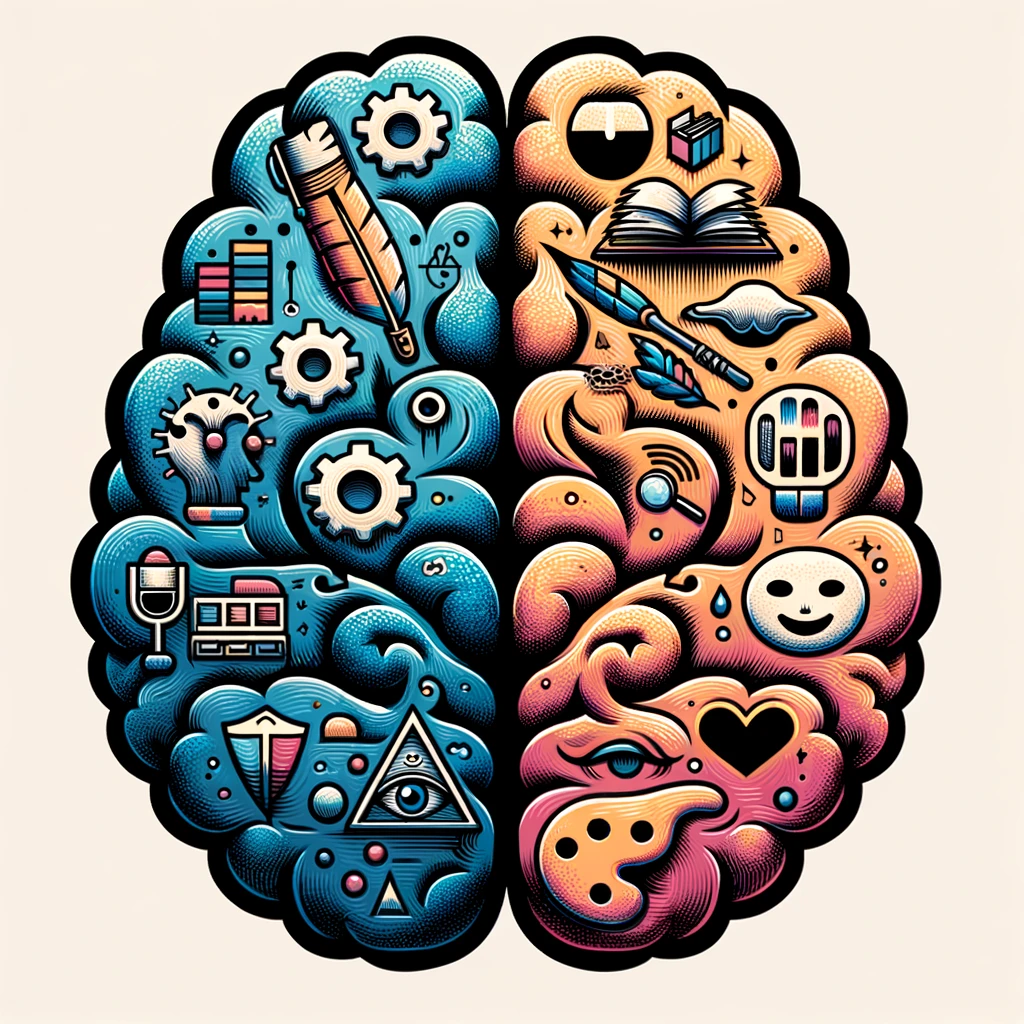

1. Logical Skills in Strategic Thinking:
These skills provide the foundation for critical thinking, problem-solving, and decision-making.

  • Anticipation: Predicting future changes or challenges allows companies to be proactive rather than reactive.
  • Meta-cognition: Understanding one’s own cognitive biases can prevent costly mistakes.
  • High-quality questions: Instead of asking, “Is our strategy working?”, ask, “What conditions make our strategy effective?”

Insight: Logical skills are all about connecting the dots and understanding the bigger picture. It’s not just about having the answers but asking the right questions.


2. Creative Skills in Strategic Thinking:
These skills bring innovation and adaptability to the forefront.

  • Storytelling: A well-crafted narrative can be more persuasive than a data-packed report.
  • Contrarianism: Sometimes, going against the grain can lead to breakthroughs.
  • Devalorization: Re-assessing and challenging established norms keeps businesses adaptable.

Insight: Creativity in strategic thinking isn’t just about new ideas; it’s about seeing old challenges in a new light and daring to challenge the status quo.


3. Emotional Skills in Strategic Thinking:
These skills anchor decisions in empathy and self-awareness.

  • Empathy: Truly understanding your customer’s or team’s perspective can lead to more nuanced strategies.
  • Courage: The business landscape is filled with uncertainty. Having the courage to take calculated risks can set companies apart.
  • Self-awareness: Recognizing one’s own strengths and weaknesses can guide better decision-making.

Insight: Emotions drive decisions. By understanding and harnessing emotions, businesses can craft more effective and resonant strategies.


The ‘Strategic Thinking MicroSkill Cheat Sheet’ isn’t just a list of skills; it’s a blueprint for success. By understanding and cultivating these skills, we can navigate the complex waters of business with confidence and foresight.

Capturing Opportunities

Nvidia CEO Jensen Huang on capturing opportunities:

“You want to position yourself near opportunities. You don’t have to be that perfect you know. You want to position yourself near the tree and even if you don’t catch the Apple before it hits the ground so long as you’re the first one to pick it up you want to position yourself close to the opportunities now. So that’s kind of a lot of my work is positioning the company near opportunities and having the company having the skills to monetize each one of the steps along the way so that we can be sustainable.”

Capturing Opportunities

TOSCA Framework

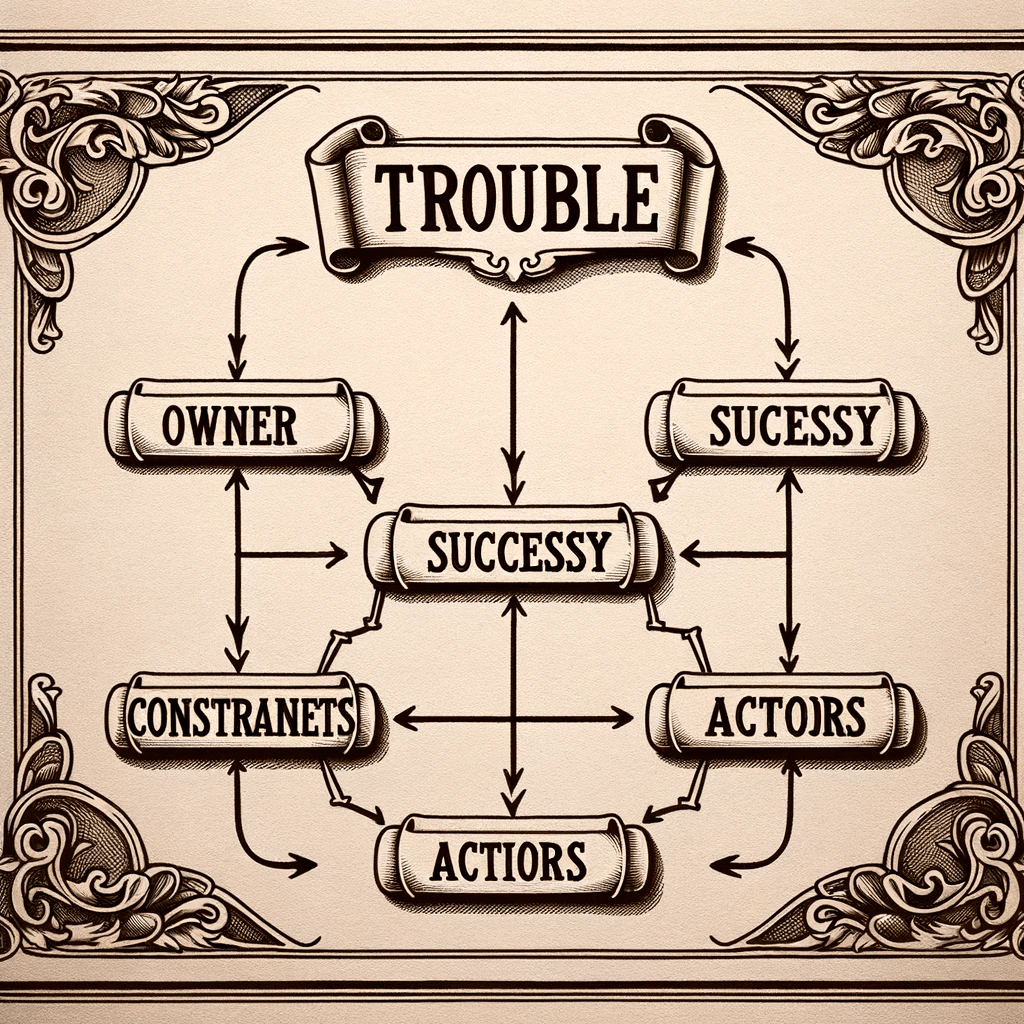
In the realm of consulting, the ability to define problems effectively is paramount. It’s the critical first step toward developing innovative solutions that drive organizations forward. One valuable tool at the disposal of strategy consultants is the TOSCA framework, an acronym that stands for Trouble, Owner, Success, Constraints, and Actors. In this blog, we’ll explore how the TOSCA framework serves as a guiding star in the complex world of strategy consulting.

TOSCA Framework

Trouble: Identifying the Heart of the Issue

The first pillar of the TOSCA framework is “Trouble.” This involves delving deep into the challenge at hand, peeling away superficial layers to uncover the core issue. Strategy consultants ask probing questions and analyze data to gain a comprehensive understanding of the trouble. They look for patterns, anomalies, and potential root causes. By defining the trouble accurately, they set the stage for targeted and effective problem-solving.

Owner: Pinpointing Responsibility

“Owner” is the second element of the TOSCA framework. It involves identifying who within the organization or team is responsible for addressing the trouble. Clear ownership ensures accountability and streamlines the decision-making process. Strategy consultants collaborate closely with stakeholders to define roles and responsibilities, ensuring that the right people are engaged in finding solutions.

Success: Defining the End Game

The third pillar, “Success,” involves articulating what victory looks like. Strategy consultants work with clients to establish clear and measurable goals. These success criteria serve as benchmarks to gauge progress and determine when the problem has been effectively resolved. Success metrics align everyone’s efforts toward a common objective, fostering motivation and focus.

Constraints: Recognizing Boundaries

Every problem-solving endeavor faces limitations, and the “Constraints” component of the TOSCA framework addresses these boundaries head-on. Strategy consultants identify and acknowledge the constraints, whether they are budgetary, logistical, or regulatory. Recognizing these limitations from the outset allows consultants to craft solutions that work within these constraints, increasing the likelihood of successful implementation.

Actors: Mapping the Landscape

The final element of the TOSCA framework is “Actors.” In any complex challenge, various individuals and groups play crucial roles. Strategy consultants create a comprehensive map of these actors, understanding their motivations, influence, and relationships. This knowledge helps consultants navigate the human dynamics involved in problem-solving, fostering collaboration and buy-in from key stakeholders.

Applying TOSCA to a Real-World Challenge

To illustrate the power of the TOSCA framework, let’s consider a real-world scenario: a struggling retail company aiming to revitalize its brand.

  1. Trouble: Through market research, the consultants identify that declining sales are the core trouble. Further analysis reveals that changing consumer preferences and increased competition are contributing factors.
  2. Owner: The CEO of the company takes ownership of addressing this issue, committing to lead the transformation effort.
  3. Success: Success is defined as achieving a 15% increase in sales within the next fiscal year.
  4. Constraints: The company faces budget constraints and a tight timeline, which must be factored into the strategy.
  5. Actors: The actors include the CEO, marketing team, store managers, and external consultants. Each group has a role in executing the revitalization plan.

The TOSCA framework is a valuable tool that empowers strategy consultants to define problems systematically and comprehensively. By addressing Trouble, Owner, Success, Constraints, and Actors, consultants lay a strong foundation for effective problem-solving. This approach not only streamlines the consulting process but also increases the likelihood of achieving meaningful and sustainable solutions. In a world where complex challenges abound, the TOSCA framework is a beacon guiding strategy consultants and their clients toward brighter horizons.