Top 5% Strategy

In the competitive world of business, achieving excellence often means adopting strategies that push you into the top 5% of performers. The key lies in an iterative process that focuses on rapid development, continuous feedback, relentless improvement, and flawless execution. Here’s how you can master this top-tier strategy:
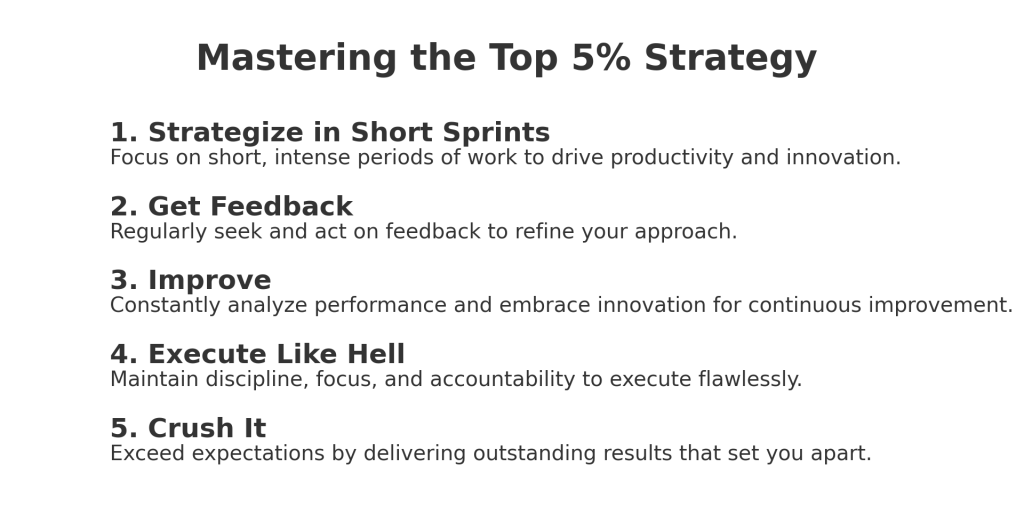
Top 5% Strategy

1. Strategize in Short Sprints

Why It Matters:
Short sprints allow for focused, intense periods of work that drive productivity and innovation. By breaking down projects into manageable segments, you can maintain momentum and quickly adapt to new information or changing conditions.


Consider the early days of Tesla. Elon Musk adopted a sprint-based approach to quickly iterate on designs and technology. This approach allowed Tesla to innovate rapidly, delivering the groundbreaking Model S in record time, which set new standards for electric vehicles.

Implementation:

  • Set Clear Goals: Define what you aim to achieve in each sprint. Ensure these goals are specific, measurable, attainable, relevant, and time-bound (SMART).
  • Prioritize Tasks: Identify high-impact tasks that can be accomplished within the sprint period.
  • Time Boxing: Allocate fixed time slots for each task, ensuring that no single activity monopolizes your time and resources.

2. Get Feedback

Why It Matters:
Feedback is crucial for understanding how your strategies and actions are perceived and where improvements can be made. It provides the insights needed to refine your approach and align it more closely with desired outcomes.


When Sarah Blakely founded Spanx, she relied heavily on feedback from friends, family, and even store clerks. By listening to the needs and preferences of real customers, she was able to refine her product and create a billion-dollar business that revolutionized the shapewear industry.

Implementation:

  • Create Feedback Loops: Regularly seek input from stakeholders, team members, and customers.
  • Encourage Open Communication: Foster an environment where constructive criticism is welcomed and valued.
  • Act on Feedback: Use the insights gained to make informed adjustments to your strategy.

3. Improve

Why It Matters:
Continuous improvement is the backbone of sustained success. By constantly refining your processes and strategies, you can stay ahead of the competition and better meet the needs of your market.

Career Insight:
Jeff Bezos’s philosophy at Amazon has always been to “fail fast” and continuously improve. This mindset has driven Amazon to innovate relentlessly, from its humble beginnings as an online bookstore to becoming a global e-commerce giant and beyond, consistently setting the bar for customer satisfaction and operational efficiency.

Implementation:

  • Analyze Performance: Regularly review performance metrics to identify areas for improvement.
  • Embrace Innovation: Stay open to new ideas and technologies that can enhance efficiency and effectiveness.
  • Implement Incremental Changes: Make small, consistent adjustments to processes to drive continuous improvement without overwhelming your team.

4. Execute Like Hell

Why It Matters:
Execution is where strategies and plans are put into action. Excellence in execution requires discipline, focus, and a relentless drive to achieve the set goals.

Wealth Example:
Warren Buffett’s success is often attributed to his unwavering focus and disciplined execution. His investment strategy is built on thorough research and decisive action, enabling him to consistently outperform the market and build one of the most significant fortunes in history.

Implementation:

  • Maintain Focus: Avoid distractions and ensure that every team member is aligned with the sprint goals.
  • Drive Accountability: Hold yourself and your team accountable for delivering results.
  • Leverage Tools and Resources: Utilize project management tools and resources to streamline execution and track progress.

5. Crush It

Why It Matters:
To “crush it” means not just meeting but exceeding expectations. It’s about delivering outstanding results that set you apart from the competition and establish you as a leader in your field.

Inspirational Story:
Consider the journey of Oprah Winfrey. From humble beginnings, she crushed every challenge in her path through relentless work ethic, sharp strategic moves, and a commitment to excellence. Her ability to connect with audiences and consistently deliver high-quality content made her a media mogul and a billionaire, setting new standards in the industry.

Implementation:

  • Set High Standards: Aim for excellence in every task and project.
  • Celebrate Success: Recognize and reward achievements to motivate continued high performance.
  • Reflect and Learn: After achieving a milestone, review what worked well and what could be improved for future sprints.

By adopting a strategy of short sprints, continuous feedback, relentless improvement, disciplined execution, and aiming to “crush it,” you position yourself to achieve and sustain top 5% performance. This iterative, focused approach not only drives immediate results but also fosters a culture of excellence and innovation, ensuring long-term success in an ever-evolving business landscape.

Embrace this strategy, and watch as your team moves from strength to strength, consistently delivering outstanding results and setting new benchmarks for success. By learning from the successes of industry leaders and applying these principles to your own endeavors, you too can achieve remarkable career and financial success.


The Hawthorne Effect

In the dynamic landscape of career progression and wealth accumulation, the Hawthorne Effect stands out as a subtle yet powerful phenomenon. Originally identified through a series of productivity studies at the Hawthorne Works factory in the 1920s and 1930s, the Hawthorne Effect describes how individuals modify their behavior in response to being observed. This principle, when applied strategically, can serve as a catalyst for professional success and financial growth.

Understanding the Hawthorne Effect

The essence of the Hawthorne Effect lies in its simple yet profound assertion: individuals tend to perform better when they know they are being observed. This improvement is not necessarily due to any specific changes in their environment or work conditions, but rather due to the psychological stimulus of being under scrutiny.

“The simple act of paying positive attention to people has a great deal to do with productivity.” – Tom Peters

This quote encapsulates the core of the Hawthorne Effect. The act of observation and attention can lead to significant enhancements in performance, as people naturally strive to meet the expectations of those observing them.

Hawthorne effect

In a professional setting, the Hawthorne Effect can be harnessed to accelerate career growth. Here’s how:

  1. Performance Reviews and Feedback: Regular performance reviews and constructive feedback sessions can create a sense of accountability and motivation. Employees who know their work is being monitored and evaluated are likely to put forth their best efforts.
  2. Mentorship and Supervision: The presence of a mentor or supervisor can serve as a powerful motivator. Regular interactions with mentors, who provide guidance and oversight, can drive individuals to achieve higher standards of performance.
  3. Team Dynamics: In team settings, the awareness that one’s contributions are visible to colleagues can foster a culture of excellence. Team members are motivated to collaborate effectively and maintain high productivity levels when they know their efforts are being observed and valued.

Enhancing Wealth through the Hawthorne Effect

The principles of the Hawthorne Effect can also be applied to personal finance and wealth building:

  1. Financial Planning and Accountability: Working with a financial advisor or joining a financial planning group can instill a sense of accountability. Knowing that your financial decisions and progress are being monitored can motivate you to adhere to your financial goals and strategies.
  2. Budget Tracking: Using budgeting tools and apps that provide regular reports and visualizations of spending habits can create a sense of observation. This awareness encourages more disciplined and mindful spending, leading to better financial health.
  3. Peer Influence: Engaging with a community of like-minded individuals who share financial goals can enhance motivation. The social aspect of financial planning groups or investment clubs can leverage the Hawthorne Effect to encourage better financial practices and decisions.

The Gardener’s Watchful Eye

Consider the role of a gardener tending to a garden. When the gardener is present, plants seem to thrive under the attentive care and watchful eye. The gardener’s presence ensures that weeds are promptly removed, plants are watered adequately, and pests are kept at bay. The garden flourishes not solely because of the environmental conditions but significantly due to the gardener’s consistent attention.

Similarly, in the context of career and wealth, the act of observation—whether by oneself or by others—can cultivate a thriving environment for growth. The awareness of being monitored encourages individuals to weed out unproductive habits, nurture beneficial ones, and remain vigilant against potential pitfalls.

The Hawthorne Effect, though rooted in early 20th-century industrial studies, remains highly relevant in modern contexts of career advancement and wealth accumulation. By leveraging the psychological impact of being observed, individuals can unlock higher levels of motivation, accountability, and performance. Whether through structured performance reviews, mentorship, financial planning, or community engagement, the principles of the Hawthorne Effect can serve as a powerful tool for personal and professional development.

Embrace the gardener’s watchful eye in your own journey, and witness the flourishing of your career and financial garden.​​​​​​​​​​​​​​​​

The John Maxwell Rule of 5

John Maxwell, renowned for his insights into leadership and personal development, proposed the Rule of 5, a strategy that focuses on performing five specific actions every day to achieve success. When applied to building wealth through your career, this approach not only fosters sustained growth but also ensures that your daily actions align with your long-term financial goals. Here, we adapt Maxwell’s Rule of 5 to the context of wealth building, providing a strategic framework to help you maximize your career potential.

1. Every day is unique and full of opportunity:

Recognize that each day brings its own set of opportunities and challenges. Approach every morning with a mindset geared towards seizing opportunities that align with your career and financial goals. Whether it’s networking, learning a new skill, or taking on a challenging project, ensure that you are always on the lookout for ways to advance professionally and increase your market value.

2. Decide who you want to be:

Your professional identity is central to your career development. Decide on the kind of professional you want to be known as—be it a thought leader, a go-to expert in a specific field, or a transformative leader. This identity should guide your decisions and actions. For instance, if you aim to be recognized as an industry expert, dedicate time each day to deepen your expertise through study, practice, or teaching others.

3. Decide how you want to live:

Your lifestyle choices have a direct impact on your ability to build wealth. Make deliberate choices about spending, saving, and investing. Create a budget that reflects your career goals and financial aspirations, and stick to it diligently. Remember, the way you manage your money today dictates the financial freedom you will enjoy in the future.

4. Decide what you want to achieve:

Goal setting is crucial. Define clear, measurable career goals that contribute to your wealth-building journey. These might include salary targets, investment milestones, or business objectives. Break these down into annual, monthly, and daily goals to maintain a clear view of what you need to do each day to move closer to these benchmarks.

5. And never give up:

Persistence is key in any long-term endeavor, particularly when it comes to building wealth. There will be setbacks and failures along the way, but resilience is a critical component of success. Keep pushing forward, learn from your mistakes, and stay committed to your goals. Regularly review and adjust your strategies to stay aligned with your evolving career and life circumstances.

Rule of 5