It sounds easy. It looks gentle. But it changes the entire dynamic of how people approach you, how they think, and how they grow.
So what do you think you should do?
It Builds Confidence
Many people come to you with a problem because they believe your answer is better than theirs. As soon as you ask this question, you hand the thinking back to them. You let them see that their judgment matters. Confidence does not grow from outsourcing decisions. It grows from making them.
It Trains the Mind
Most problems are not solved by knowing every fact. They are solved by understanding the options, the tradeoffs, and the impact. When you ask this question, you force the person to walk through these steps. They learn to think through consequences. They learn to compare paths. They learn to slow down and choose.
It Reduces Dependence
If you answer every question, people stop thinking for themselves. If you ask them what they would do, they begin to trust their own reasoning. Over time, you spend less time firefighting and more time guiding. The person becomes someone who brings you solutions, not crises.
It Reveals Their True Concern
Sometimes the problem they share is not the real issue. When you ask what they think they should do, you uncover what they are afraid of, what they are unsure about, or where they are stuck. You hear their reasoning. You see the gap. You know exactly where to help.
It Creates Ownership
The moment someone says what they think the next step should be, they take responsibility for it. They are no longer waiting for your instruction. They are taking action. Leadership is not given. It is practiced. This question helps people practice.
One sentence that captures the idea: When someone brings you a problem, the smartest thing you can do is ask the question that sends the thinking back to them.
Not to avoid solving, but to help them grow, to help them reason, and to help them become the kind of person who knows what to do next time.
We live in a world that constantly nudges us to evaluate ourselves—to measure our worth based on achievements, appearances, or how we stack up against others. It’s easy to get caught in a relentless cycle of self-judgment, scrutinizing every decision, action, or perceived flaw. But what if we took a step back and chose not to judge ourselves at all?
Don’t Judge Yourself at All
The Weight of Self-Judgment
“Don’t judge yourself at all.”
“Don’t put gigantic expectations on yourself.”
Consider the story of Lisa, a talented graphic designer who pours her heart into every project. Despite her creativity and dedication, she often fixates on minor flaws in her work. After presenting a successful campaign, instead of celebrating, she dwells on a tiny detail she felt could have been better. This self-judgment doesn’t propel her forward; it leaves her feeling drained and inadequate.
Self-judgment often masquerades as a motivator, pushing us to improve or strive for better. However, more often than not, it becomes a heavy burden. It can lead to anxiety, depression, and a perpetual feeling of not being “good enough.” When we judge ourselves harshly, we undermine our self-esteem and hinder personal growth.
Embracing Self-Compassion
Instead of judging ourselves, embracing self-compassion can be a transformative alternative. Take Alex’s experience, for example. After failing an important exam, he initially spiraled into negative self-talk: “I’m such a failure; I’ll never succeed.” Realizing this wasn’t helping, he decided to treat himself as he would a close friend. He acknowledged his disappointment but also recognized the effort he had put in and the external factors that may have impacted his performance. This shift allowed him to approach his retake with a clearer mind and renewed confidence.
Self-compassion involves treating ourselves with the same kindness and understanding we would offer others. It means acknowledging our imperfections without harsh criticism and recognizing that making mistakes is an inherent part of being human.
Why Gigantic Expectations Hold Us Back
Alongside self-judgment, setting gigantic expectations can be equally detrimental. Maria dreamed of starting her own bakery. She set a goal to open three storefronts within the first year. This immense pressure led to burnout, and she began to lose her passion for baking altogether. By setting such unrealistic expectations, she couldn’t appreciate the success of her first, beloved shop.
While having goals is important, unrealistic expectations set us up for disappointment. They create an unattainable standard that can lead to feelings of failure, even when we’ve made significant progress. When we expect too much too soon, we overlook the value of gradual growth.
Trusting ourselves and embracing authenticity can turn a stage from a battlefield into a platform for our true selves.
What gets in the way is our conscious mind constantly criticizing us, constantly telling us we’re not good enough.
The Beauty of Small Steps
By letting go of enormous expectations, we allow ourselves to appreciate the journey rather than fixate solely on the destination. When David decided to run a marathon, he didn’t start by attempting 26 miles. He began with short runs, celebrating each extra mile he could handle. Each small victory kept him motivated, and eventually, he completed the marathon—a goal achieved through patience and persistence.
Celebrating small victories fosters motivation and builds confidence. It’s about progress, not perfection. These incremental steps not only lead us toward our goals but also make the process enjoyable and sustainable.
Practical Steps to Shift Your Mindset
Mindful Awareness: Pay attention to your inner dialogue. When you notice self-judgment creeping in, acknowledge it without criticism. For instance, if you catch yourself thinking, “I always mess things up,” pause and recognize this thought pattern.
Reframe Negative Thoughts: Challenge self-critical thoughts by reframing them in a more positive or realistic light. If you didn’t get the job you wanted, instead of thinking, “I’m not good enough,” try, “This opportunity wasn’t the right fit, but there are others out there.”
Set Realistic Goals: Break down larger objectives into manageable tasks. Emily wanted to write a novel but felt overwhelmed. She set a goal to write 500 words a day. This approach made the task less daunting, and over time, she completed her manuscript.
Practice Gratitude: Focus on what you have accomplished and what you’re grateful for. Keeping a gratitude journal can shift attention away from what you perceive as lacking. Michael, who struggled with self-esteem, began noting three things he appreciated about himself each day, which improved his overall outlook.
Seek Support: Surround yourself with people who uplift and encourage you. Join a community or find a mentor. When Jasmine shared her struggles with close friends, she found comfort and valuable advice that helped her navigate her challenges more effectively.
Ask yourself: How can I allow myself to relax, so I naturally speak better?
Letting go of self-judgment and enormous expectations isn’t about lowering standards or ignoring personal growth. It’s about fostering a healthier relationship with ourselves. When we embrace self-compassion and set realistic goals, we create a supportive inner environment where we can thrive authentically.
Remember, you’re on a unique journey that’s entirely your own. Like a gardener tending to a plant, nurture yourself with patience and kindness, and you’ll bloom in your own time. Also, you are more than your achievements or shortcomings. You are a work in progress, and that’s perfectly okay.
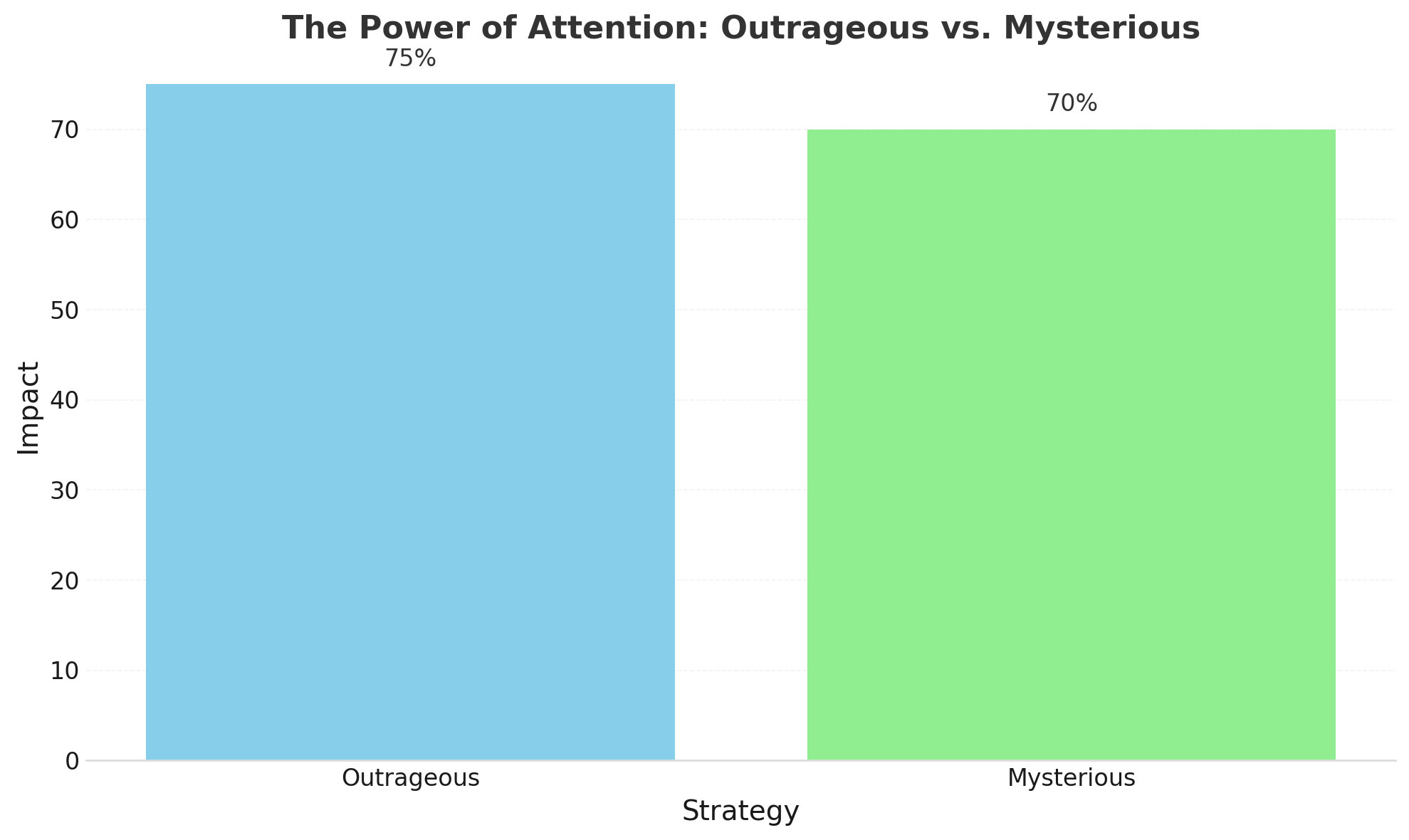
In today’s fast-paced, information-saturated world, capturing and maintaining attention has become a valuable currency. Whether you’re an entrepreneur, artist, or influencer, your ability to stand out from the crowd can make or break your success. This is where Law 6 comes into play: Attract Attention by being outrageous or creating an aura of mystery.
The Attention Economy
We live in an attention economy, where the most precious commodity is not money or resources, but the ability to capture and hold people’s focus. With countless stimuli vying for our attention every second, those who can cut through the noise and make a lasting impression are the ones who ultimately succeed.
The Power of Being Outrageous
One effective way to attract attention is by being outrageous. This doesn’t mean you should be offensive or harmful, but rather that you should push boundaries and challenge conventions in a way that makes people take notice. Think of figures like Lady Gaga, Elon Musk, or Richard Branson – their unconventional approaches and bold statements have kept them in the public eye and contributed to their success.
Being outrageous can involve:
Making bold claims or predictions
Adopting an unusual personal style
Taking on seemingly impossible challenges
Speaking out on controversial topics
Creating products or experiences that defy expectations
The Allure of Mystery
On the other hand, cultivating an air of mystery can be equally effective in attracting attention. Human curiosity is a powerful force, and people are naturally drawn to what they don’t fully understand. By strategically withholding information or creating an enigmatic persona, you can pique interest and keep people engaged.
Ways to create mystery include:
Teasing upcoming projects or announcements
Maintaining a low profile on social media
Crafting an intriguing personal narrative
Using symbolism or hidden meanings in your work
Leaving certain aspects of your life or business open to interpretation
The Value of Any Attention
It’s important to note that, according to this law, any attention – positive or negative – is better than being ignored. While it’s generally preferable to attract positive attention, even controversy or criticism can work in your favor by keeping you in the public eye and sparking discussions around your brand or persona.
However, it’s crucial to navigate this carefully. While negative attention can initially boost visibility, it’s essential to have a strategy for turning it into a positive narrative or leveraging it for growth.
Attention Leads to Wealth
The ultimate goal of attracting attention is to convert it into tangible benefits, often in the form of wealth. When you successfully capture people’s interest, you open doors to numerous opportunities:
Increased brand recognition and loyalty
Higher engagement rates on social media and other platforms
More opportunities for collaborations and partnerships
Greater media coverage and free publicity
Improved sales and revenue streams
In a world where attention is increasingly scarce and valuable, mastering the art of attracting and maintaining it can be a game-changer for your personal and professional success. Whether you choose to be outrageous, mysterious, or a combination of both, remember that the key is to be authentic and strategic in your approach.
By implementing Law 6 and making yourself impossible to ignore, you can harness the power of attention to create wealth, influence, and lasting impact in your chosen field. Just remember to use this power responsibly and always strive to provide value to your audience, even as you captivate their attention.


 Maverick