10 Frameworks Used for Time Management

Most conversations about focus start in the wrong place.
They assume distraction is a failure of discipline.
They prescribe motivation, grit, or better habits.
focus, productivity, focus systems, time blocking, deep work, daily planning, execution over motivation, work design, attention management, knowledge work, high performance, founder productivity, executive productivity, burnout prevention, calendar discipline, task management, personal operating system, work smarter, intentional work, distraction control, modern work, systems thinking, planning your day, decision fatigue, cognitive load, async work, creator economy, startup life, leadership, self mastery

That framing is convenient and wrong.

Focus does not disappear because people lack willpower.
Focus disappears because the day is poorly designed.

You do not rise to the level of your goals.
You fall to the level of your systems.

This distinction matters because motivation is intermittent.
Systems operate continuously.

Why motivation keeps failing you

Motivation spikes and fades.
Energy fluctuates.
Attention degrades under noise.

Yet most productivity advice assumes you can repeatedly make high quality decisions in an environment full of interruptions. That assumption is false.
Environment and structure shape behavior whether you are alert or exhausted.
When focus breaks down, the cause is rarely effort.
It is friction, ambiguity, and constant renegotiation.

Focus is not summoned.
It is allowed.


The real problem: the unmanaged day

High performers are not short on ambition.
They are short on a repeatable daily operating system.

The same failure modes appear across roles and industries.

Tasks are scattered across email, chat, notes, and memory.
Calendars reflect meetings but ignore real work.
Days begin reactively, surrendered to the first notification.

The result is familiar.
Busyness without leverage.
Late nights fixing what should have been decided in the morning.

This is not a personal failing.
It is a systems failure.

What a real focus system must do

A functional focus system is not inspirational.
It is mechanical.
It works even on bad days.
At minimum, it must do three things.

Decide once
Define three to five outcomes that matter before the day starts.

Design the day
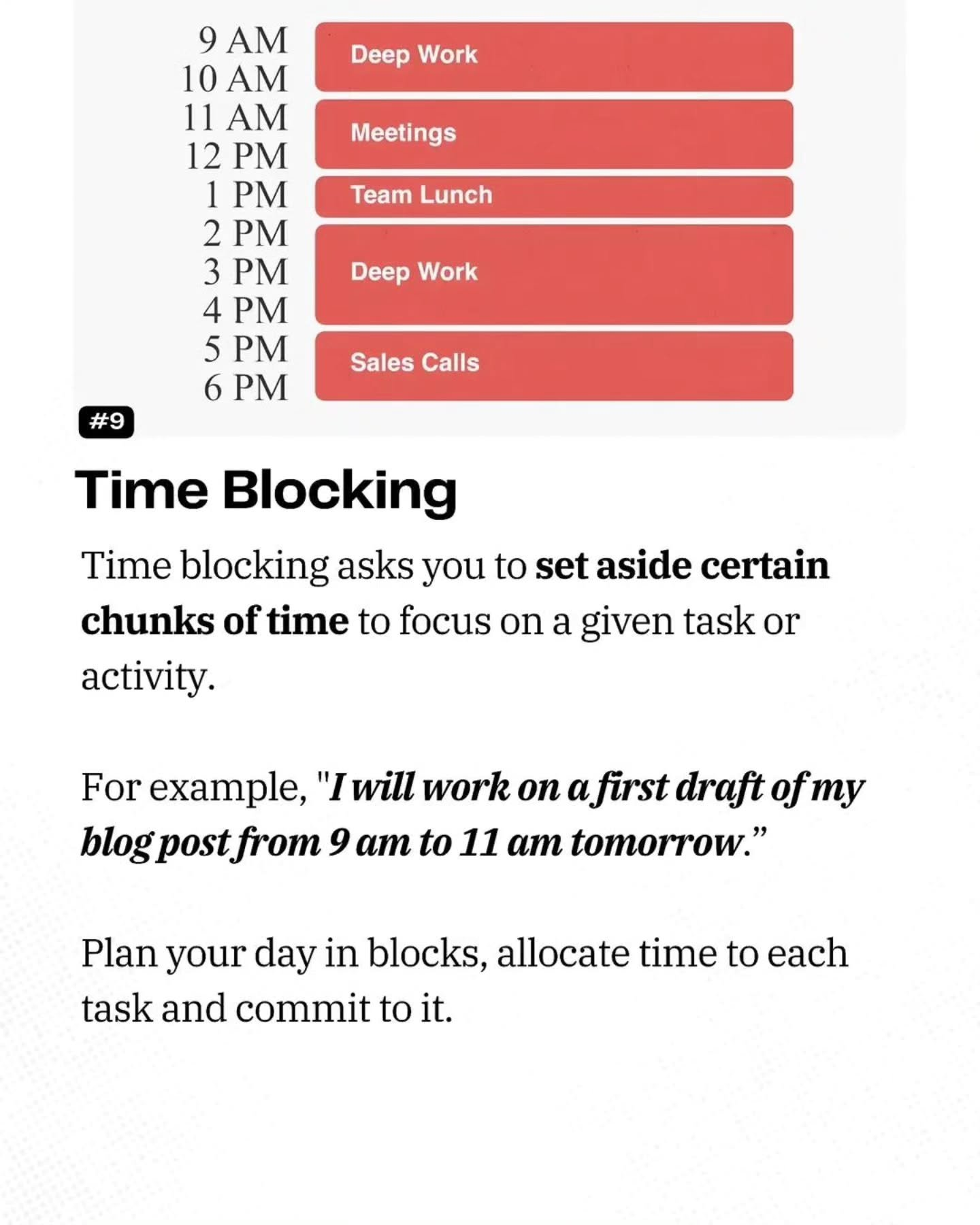
Translate those outcomes into explicit time blocks. Treat the calendar like a project plan.

Defend execution
Make distraction harder than staying on task.

Anything less is hope masquerading as planning.


Why tools matter more than techniques

Most people already know what they should do.
They still fail to do it.

The reason is friction.

If planning requires stitching together multiple tools, motivation is consumed before work begins.
If replanning is painful, people default to reacting.
If there is no feedback loop, the same mistakes repeat.

A system only works if it is easy to repeat.


How FocusDay fits

FocusDay is built around a single idea: remove friction from daily execution.
It does not try to motivate you.
It gives your day structure.

Practically, this means:

One place for the day
Instead of managing tasks across tools, your priorities live in one clean workspace. See how that works at https://usefocusday.com.

Time anchored work
Key tasks become calendar blocks, not vague intentions. Focus is tied to time, not mood. This is the core workflow shown on https://usefocusday.com.

Visible capacity
When everything sits on a timeline, overload is exposed early. Tradeoffs happen before the day collapses.

Execution feedback
Planned versus actual work is visible, allowing the system to improve instead of repeating the same errors.

The goal is simple.
You open FocusDay and the day is already decided.
Your job is execution, not hourly renegotiation.


A practical way to start today

Use FocusDay as the container for execution, not just another task list.

Morning
Open FocusDay before opening email.
Write the three outcomes that would make today successful.
Block time for each one. You can start this flow directly at https://usefocusday.com.

During the day
Work from the plan.
If something urgent appears, replan consciously inside FocusDay instead of letting it hijack the day.

Evening
Mark what was completed.
Adjust estimates.
Notice what consistently slips.

That pattern is not a character flaw.
It is a systems gap asking to be fixed.


The shift

Over time, focus stops being something you chase.
It becomes the default output of a well designed day.

Motivation becomes optional.
Clarity becomes automatic.
Progress becomes repeatable.

That is the difference between hoping to focus
and building a system that produces it.

If the problem is structural, the solution must be too.
That is exactly what FocusDay is built for.
Start by designing tomorrow at https://usefocusday.com.

When Someone Brings You a Problem, Ask this

It sounds easy. It looks gentle. But it changes the entire dynamic of how people approach you, how they think, and how they grow.

So what do you think you should do?

It Builds Confidence

Many people come to you with a problem because they believe your answer is better than theirs. As soon as you ask this question, you hand the thinking back to them. You let them see that their judgment matters. Confidence does not grow from outsourcing decisions. It grows from making them.

It Trains the Mind

Most problems are not solved by knowing every fact. They are solved by understanding the options, the tradeoffs, and the impact. When you ask this question, you force the person to walk through these steps. They learn to think through consequences. They learn to compare paths. They learn to slow down and choose.

It Reduces Dependence

If you answer every question, people stop thinking for themselves. If you ask them what they would do, they begin to trust their own reasoning. Over time, you spend less time firefighting and more time guiding. The person becomes someone who brings you solutions, not crises.

It Reveals Their True Concern

Sometimes the problem they share is not the real issue. When you ask what they think they should do, you uncover what they are afraid of, what they are unsure about, or where they are stuck. You hear their reasoning. You see the gap. You know exactly where to help.

It Creates Ownership

The moment someone says what they think the next step should be, they take responsibility for it. They are no longer waiting for your instruction. They are taking action. Leadership is not given. It is practiced. This question helps people practice.


One sentence that captures the idea:
When someone brings you a problem, the smartest thing you can do is ask the question that sends the thinking back to them.

Not to avoid solving, but to help them grow, to help them reason, and to help them become the kind of person who knows what to do next time.

Leadership Body Language: 10 Powerful Techniques to Command Respect

Have you ever noticed how certain leaders command attention the moment they enter a room? It’s rarely just about what they say—it’s how they carry themselves. The most influential leaders understand that body language speaks volumes before they utter a single word.

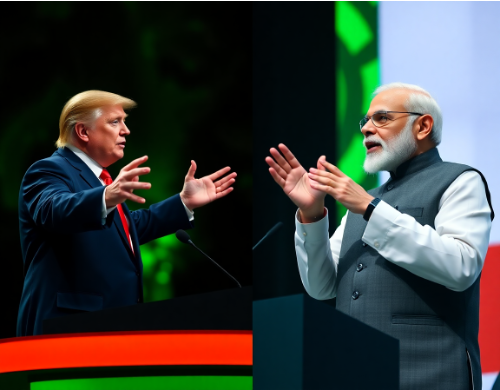
Research shows that up to 55% of communication is nonverbal. By mastering these 10 powerful body language techniques used by world-class leaders, you can dramatically enhance your presence and influence.

Leadership Body Language

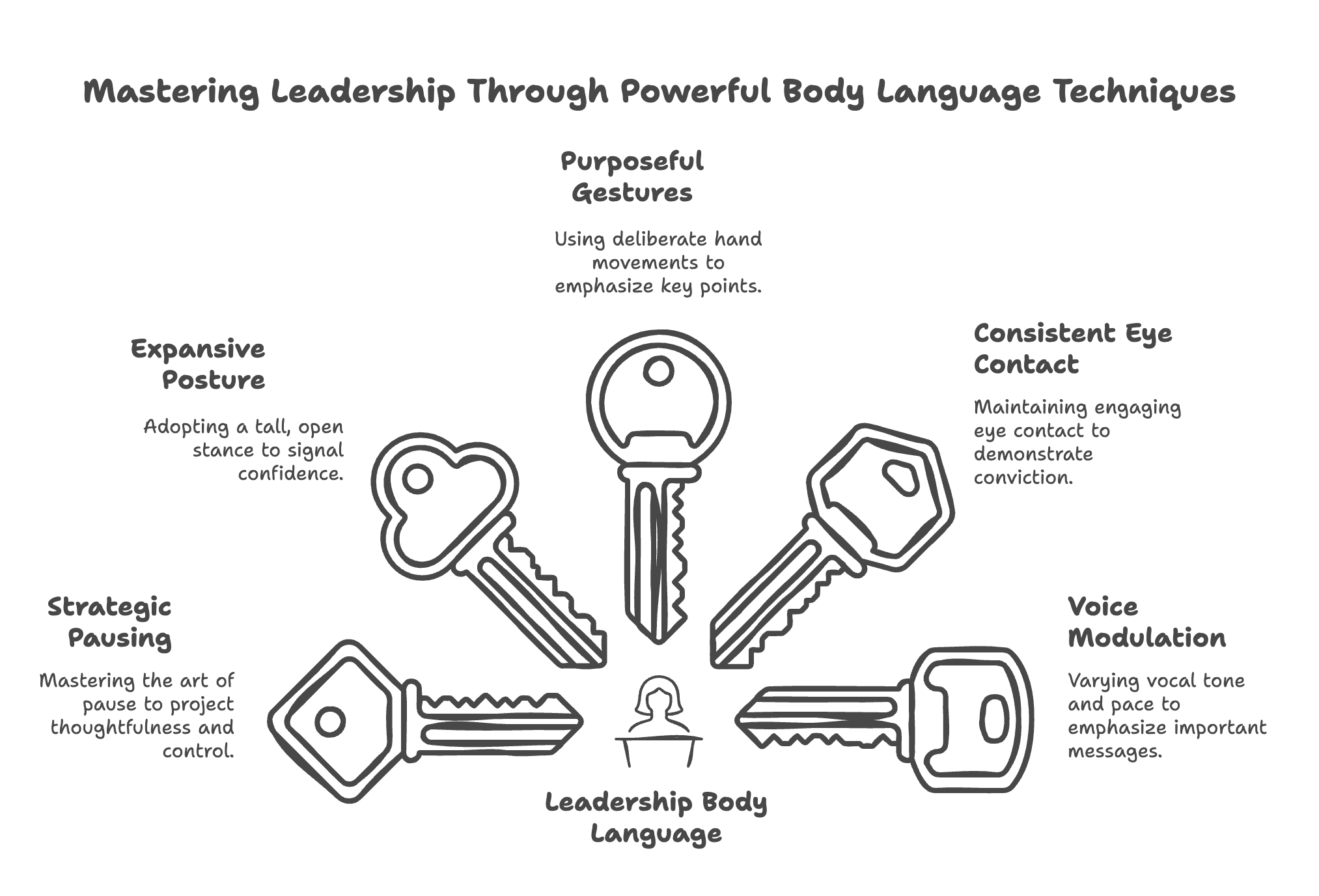
1. Strategic Pausing

Watch footage of Barack Obama speaking, and you’ll notice his masterful use of the pause. Rather than rushing to respond to questions or challenges, effective leaders take a moment to gather their thoughts. This deliberate pause projects thoughtfulness and control rather than reactivity.

Try this: Count to three in your mind before responding to important questions. This brief moment allows you to formulate a more thoughtful response while signaling confidence and composure.

2. Expansive Posture

Leaders naturally take up appropriate space. This doesn’t mean appearing aggressive or domineering—rather, it’s about standing tall with shoulders back and chest open. This expansive posture signals confidence and commands respect.

Try this: Before important meetings, stand in a “power pose” for two minutes (feet shoulder-width apart, hands on hips or stretched overhead). Research suggests this can actually increase testosterone levels and decrease stress hormones.

3. Purposeful Gestures

Notice how influential leaders use clear, deliberate hand movements to emphasize key points. These purposeful gestures draw attention and reinforce their message, unlike the small, fidgety movements that signal nervousness.

Try this: Practice using broader, more deliberate hand gestures when making important points. Keep movements above the waist and visible to your audience.

4. Consistent Eye Contact

Steady, confident eye contact demonstrates engagement and conviction. Leaders maintain appropriate eye contact without the unnerving, unblinking “threat tracking” stare that creates discomfort.

Try this: Practice the “triangle technique”—moving your gaze between both eyes and the forehead of the person you’re speaking with. This creates connection without appearing intimidating.

5. Voice Modulation

The most compelling leaders vary their vocal tone, pace, and volume strategically. This prevents monotony and helps emphasize key points. Think of Martin Luther King Jr.’s powerful speeches with their rhythmic crescendos and thoughtful pauses.

Try this: Record yourself speaking and identify places where you can add emphasis through volume, slow down for important points, or speed up to create energy.

6. Selective Mirroring

Skilled leaders subtly adopt elements of others’ body language to build rapport, while still maintaining their own authoritative presence. This creates connection without sacrificing leadership stature.

Try this: Subtly match the energy level and speaking pace of those you’re communicating with, while maintaining your leadership posture.

7. Controlled Facial Expressions

Exceptional leaders maintain facial composure, particularly during challenging situations. They don’t telegraph every emotion, maintaining a calm, steady demeanor that inspires confidence.

Try this: Practice your “neutral but engaged” face in the mirror. This expression should appear attentive and interested without revealing anxiety or distress.

8. Grounded Stance

Watch footage of world leaders and notice how they stand—feet shoulder-width apart, weight evenly distributed. This grounded stance projects stability and confidence.

Try this: Practice standing with feet planted firmly, about shoulder-width apart. Feel the connection with the ground and avoid shifting weight from foot to foot.

9. Limited Self-Touching

Effective leaders avoid nervous habits like touching their face, adjusting clothing, or fidgeting with objects. These self-soothing behaviors signal insecurity and undermine authority.

Try this: Become aware of your self-touching habits and practice keeping your hands still or purposefully engaged in gestures rather than nervous adjustments.

10. Intentional Movement

The most commanding leaders move with intention rather than rushing. As mentioned in body language research, this “Royal Bengal Tiger” quality of deliberate movement draws attention and signals confidence.

Try this: Practice moving slightly more slowly than your natural pace. Take your time entering rooms, approaching podiums, or crossing stages.

Bringing It All Together

These techniques are most powerful when they become natural extensions of your authentic leadership style rather than forced affectations. Start by focusing on one or two areas where you see the most opportunity for growth.

Remember—effective leadership body language isn’t about manipulation. It’s about ensuring your nonverbal communication aligns with and reinforces your message, allowing your true leadership qualities to shine through unhindered by distracting habits.

What body language technique will you focus on developing first?