6M Framework

In the realm of business management and operational excellence, the 6M Framework has emerged as a pivotal model for diagnosing and enhancing organizational processes. This framework, which encapsulates Management, Methods, Machines, Materials, Measurements, and Mother Nature (Environment), offers a comprehensive lens for scrutinizing and optimizing various facets of an operation. Understanding and effectively implementing the 6M Framework can lead to significant improvements in efficiency, quality, and overall business performance.

1. Management

The cornerstone of the 6M Framework is Management, which underscores the role of leadership and decision-making in an organization. Effective management is characterized by strategic planning, goal-setting, and fostering a culture of continuous improvement. Leaders must ensure that objectives are clear, resources are adequately allocated, and that there is a coherent strategy to guide the organization towards its goals.

2. Methods

Methods refer to the procedures, techniques, and processes used in the production or service delivery. Optimizing methods involves streamlining processes, eliminating waste, and ensuring that operations are as efficient as possible. This includes adopting best practices, continuous process improvement, and embracing innovative approaches to meet evolving business challenges.

3. Machines

Machines in the 6M Framework represent the technology and equipment used in operations. The focus is on ensuring that machinery is reliable, up-to-date, and properly maintained. This also encompasses leveraging new technologies to enhance productivity and quality, while also considering the cost-benefit aspects of technological investments.

4. Materials

Materials pertain to the raw materials, components, and supplies used in the production process. Effective management of materials involves optimizing inventory levels, ensuring quality, and reducing waste. This also includes exploring sustainable materials and supply chain practices to enhance the environmental footprint of the organization.

5. Measurements

Measurements are critical for assessing the performance of various aspects of the business. This involves establishing key performance indicators (KPIs), regular monitoring, and data-driven decision-making. Accurate and timely measurements allow for identifying areas for improvement, benchmarking against industry standards, and driving strategic initiatives.

6. Mother Nature (Environment)

Lastly, Mother Nature, or the Environment, highlights the importance of considering environmental factors and sustainability in operations. This includes compliance with environmental regulations, minimizing the ecological impact, and adopting sustainable practices. Emphasizing environmental responsibility not only benefits the planet but also enhances the organization’s reputation and resilience.

The 6M Framework offers a structured and holistic approach to analyzing and enhancing business operations. By systematically addressing each of these components, organizations can achieve operational excellence, drive growth, and maintain a competitive edge in an increasingly complex business environment. The implementation of this framework requires a concerted effort across all levels of the organization and a commitment to continuous improvement.

Six Thinking Hats Framework

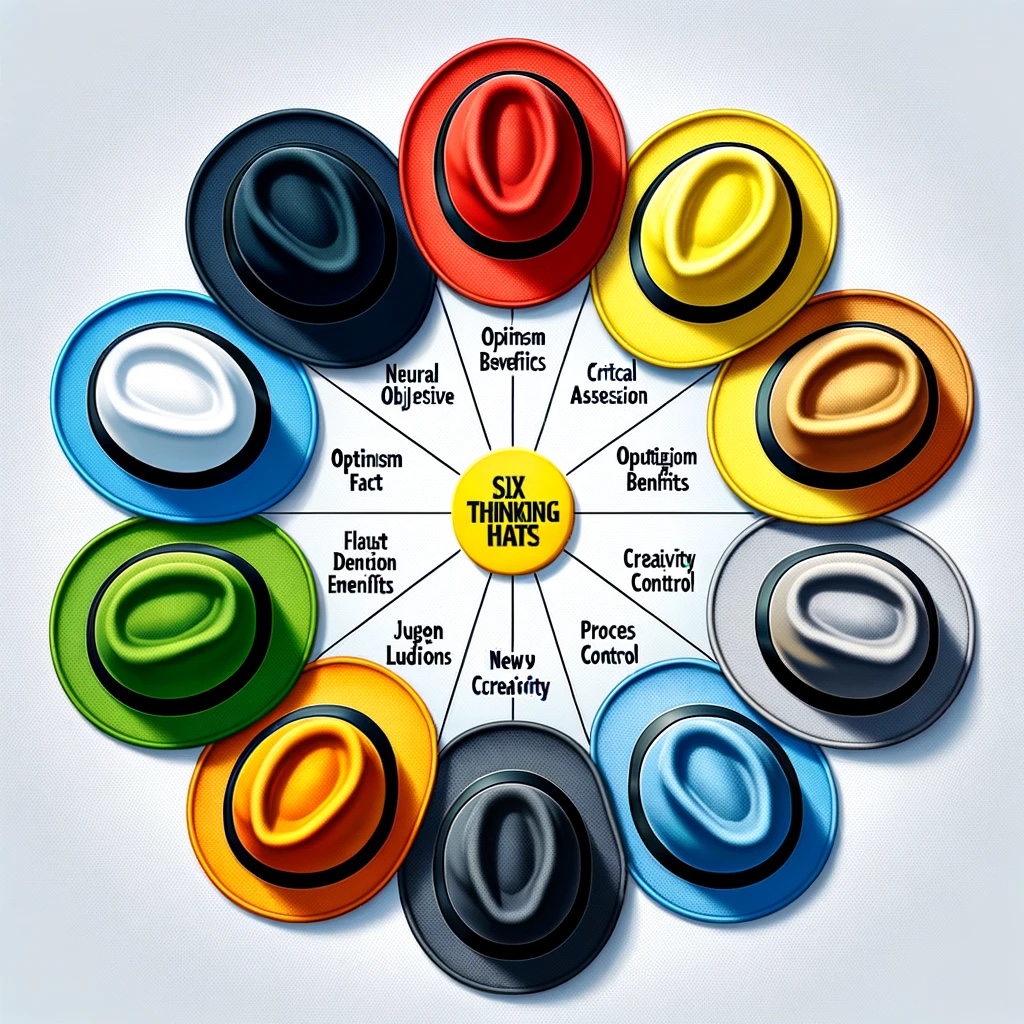
Always approach problem-solving using the Six Thinking Hats framework, which is a valuable tool for examining issues from various perspectives:

  1. White Hat (Facts and Information): Start by gathering all the available data and facts related to the problem. What do we know?
  2. Red Hat (Emotions and Feelings): Consider the emotional aspects of the problem. How do you and your team feel about it? What are your initial gut reactions?
  3. Black Hat (Critical Thinking): Analyze the potential drawbacks, risks, and challenges associated with the problem. What are the potential pitfalls and obstacles?
  4. Yellow Hat (Optimism and Positivity): Focus on the positive aspects and opportunities that may arise from solving the problem. What are the potential benefits and solutions?
  5. Green Hat (Creativity and Innovation): Encourage creative thinking and brainstorming for new ideas and solutions. What innovative approaches can you explore?
  6. Blue Hat (Process Control): Finally, take control of the thinking process. Summarize the insights gained from the other hats, prioritize actions, and outline a plan to address the problem. What’s the next step?

By systematically examining the problem from these different angles, you can arrive at a well-rounded and thoughtful solution.

Six Hats framework

Cracking the Code: Why Numbers are the Language of Business

The language of business is numbers. This phrase is often used to describe the importance of financial metrics in understanding and running a business. In order to make informed decisions, it is essential to have a solid grasp of financial concepts and data. In this blog post, we will explore why numbers are the language of business, how they are used to make decisions, and why it is important to understand them.

Why are numbers the language of business?

Numbers are the language of business because they provide a common way to measure and evaluate the performance of a company. They allow for comparisons between different time periods, different companies, and different industries. Numbers also allow for objective analysis of financial statements, which are a key tool for understanding a company’s financial health.

Numbers can be used to track and measure many different aspects of a business, including revenue, expenses, profits, and cash flow. They can be used to identify trends and patterns, and to make informed decisions about how to allocate resources.

How are numbers used to make decisions in business?

Numbers are used to make decisions in business by providing a basis for analysis and evaluation. Financial data can be used to answer many different types of questions, such as:

  • How profitable is the company?
  • What are the company’s financial strengths and weaknesses?
  • Are there areas of the business that are not performing well?
  • What are the company’s financial risks?

By answering these questions, financial data can help managers make decisions about how to allocate resources, where to focus their efforts, and what strategies to pursue.

For example, if a company’s profit margins are declining, managers may look at the data to identify the causes of the decline. They may discover that expenses have increased, or that competition has intensified. Armed with this information, they can make decisions about how to reduce expenses or how to differentiate their products to stay ahead of the competition.

Why is it important to understand the language of business?

Understanding the language of business is essential for anyone who wants to be successful in the world of business. Whether you are an entrepreneur starting a new venture, a manager overseeing a team, or an investor looking to make informed decisions, you need to be able to understand and interpret financial data.

In addition, understanding the language of business can help you avoid common pitfalls and mistakes. For example, if you don’t understand the difference between profit and revenue, you may make decisions that harm your company’s financial health. Similarly, if you don’t understand the importance of cash flow, you may find yourself unable to pay your bills or make necessary investments.

The language of business is numbers. Financial data is essential for understanding the performance of a company and making informed decisions. Whether you are a manager, entrepreneur, or investor, it is important to understand and interpret financial data. By doing so, you can make better decisions, avoid common mistakes, and increase your chances of success.