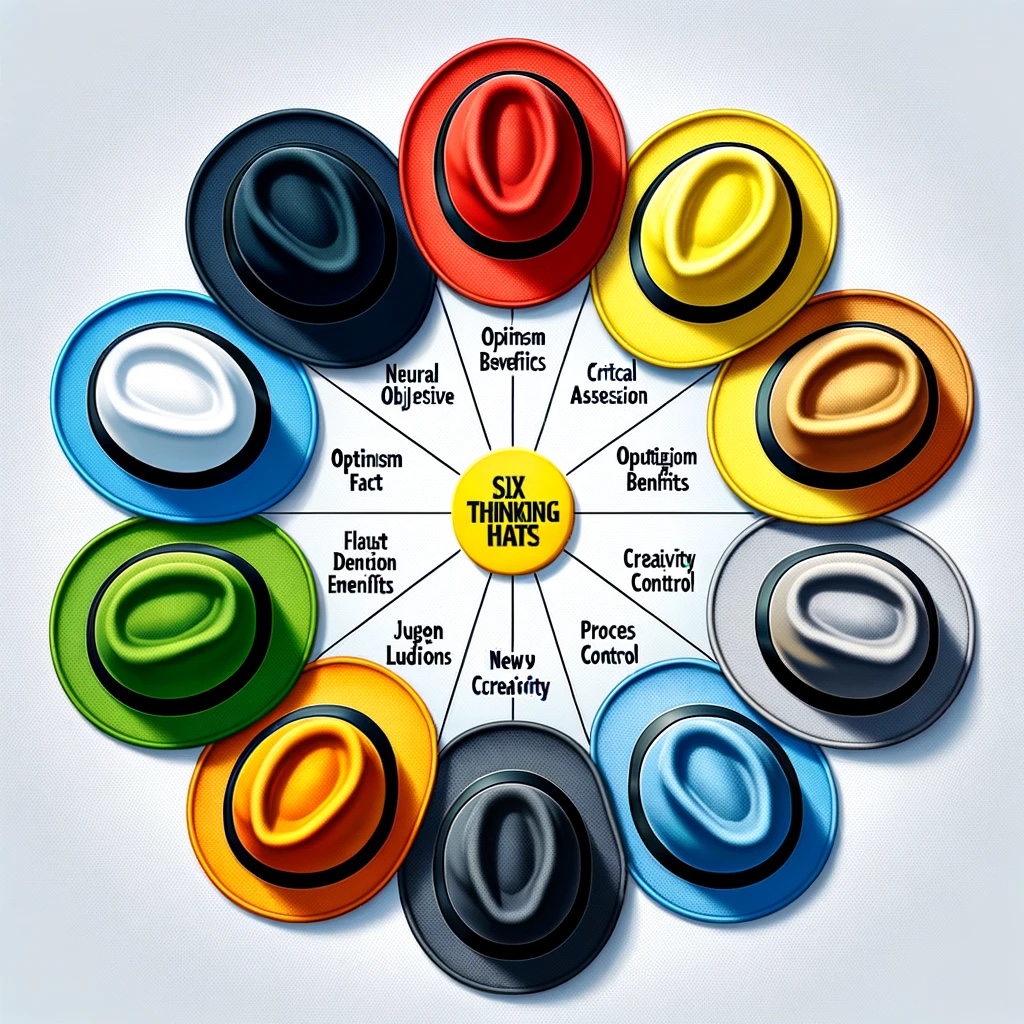
Always approach problem-solving using the Six Thinking Hats framework, which is a valuable tool for examining issues from various perspectives:
- White Hat (Facts and Information): Start by gathering all the available data and facts related to the problem. What do we know?
- Red Hat (Emotions and Feelings): Consider the emotional aspects of the problem. How do you and your team feel about it? What are your initial gut reactions?
- Black Hat (Critical Thinking): Analyze the potential drawbacks, risks, and challenges associated with the problem. What are the potential pitfalls and obstacles?
- Yellow Hat (Optimism and Positivity): Focus on the positive aspects and opportunities that may arise from solving the problem. What are the potential benefits and solutions?
- Green Hat (Creativity and Innovation): Encourage creative thinking and brainstorming for new ideas and solutions. What innovative approaches can you explore?
- Blue Hat (Process Control): Finally, take control of the thinking process. Summarize the insights gained from the other hats, prioritize actions, and outline a plan to address the problem. What’s the next step?
By systematically examining the problem from these different angles, you can arrive at a well-rounded and thoughtful solution.


 Maverick