TOSCA Framework

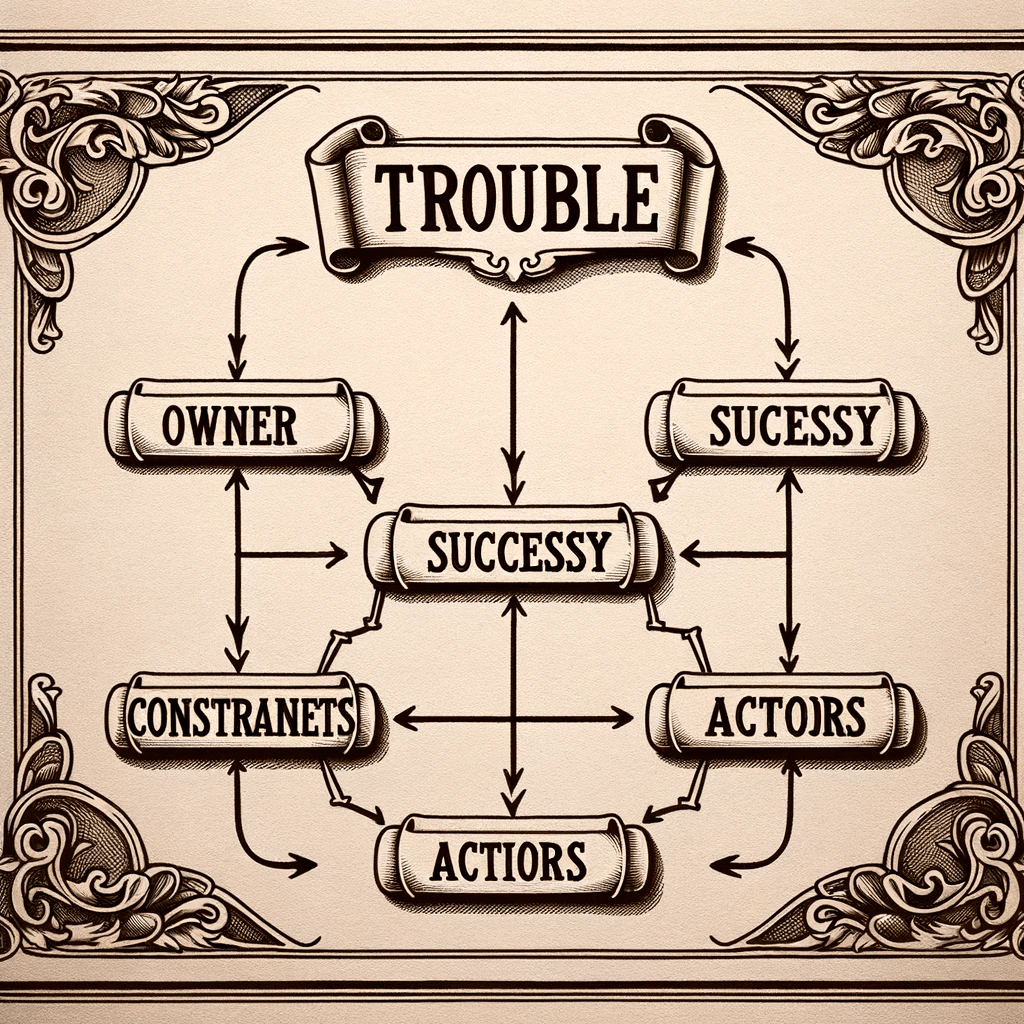
In the realm of consulting, the ability to define problems effectively is paramount. It’s the critical first step toward developing innovative solutions that drive organizations forward. One valuable tool at the disposal of strategy consultants is the TOSCA framework, an acronym that stands for Trouble, Owner, Success, Constraints, and Actors. In this blog, we’ll explore how the TOSCA framework serves as a guiding star in the complex world of strategy consulting.

TOSCA Framework

Trouble: Identifying the Heart of the Issue

The first pillar of the TOSCA framework is “Trouble.” This involves delving deep into the challenge at hand, peeling away superficial layers to uncover the core issue. Strategy consultants ask probing questions and analyze data to gain a comprehensive understanding of the trouble. They look for patterns, anomalies, and potential root causes. By defining the trouble accurately, they set the stage for targeted and effective problem-solving.

Owner: Pinpointing Responsibility

“Owner” is the second element of the TOSCA framework. It involves identifying who within the organization or team is responsible for addressing the trouble. Clear ownership ensures accountability and streamlines the decision-making process. Strategy consultants collaborate closely with stakeholders to define roles and responsibilities, ensuring that the right people are engaged in finding solutions.

Success: Defining the End Game

The third pillar, “Success,” involves articulating what victory looks like. Strategy consultants work with clients to establish clear and measurable goals. These success criteria serve as benchmarks to gauge progress and determine when the problem has been effectively resolved. Success metrics align everyone’s efforts toward a common objective, fostering motivation and focus.

Constraints: Recognizing Boundaries

Every problem-solving endeavor faces limitations, and the “Constraints” component of the TOSCA framework addresses these boundaries head-on. Strategy consultants identify and acknowledge the constraints, whether they are budgetary, logistical, or regulatory. Recognizing these limitations from the outset allows consultants to craft solutions that work within these constraints, increasing the likelihood of successful implementation.

Actors: Mapping the Landscape

The final element of the TOSCA framework is “Actors.” In any complex challenge, various individuals and groups play crucial roles. Strategy consultants create a comprehensive map of these actors, understanding their motivations, influence, and relationships. This knowledge helps consultants navigate the human dynamics involved in problem-solving, fostering collaboration and buy-in from key stakeholders.

Applying TOSCA to a Real-World Challenge

To illustrate the power of the TOSCA framework, let’s consider a real-world scenario: a struggling retail company aiming to revitalize its brand.

  1. Trouble: Through market research, the consultants identify that declining sales are the core trouble. Further analysis reveals that changing consumer preferences and increased competition are contributing factors.
  2. Owner: The CEO of the company takes ownership of addressing this issue, committing to lead the transformation effort.
  3. Success: Success is defined as achieving a 15% increase in sales within the next fiscal year.
  4. Constraints: The company faces budget constraints and a tight timeline, which must be factored into the strategy.
  5. Actors: The actors include the CEO, marketing team, store managers, and external consultants. Each group has a role in executing the revitalization plan.

The TOSCA framework is a valuable tool that empowers strategy consultants to define problems systematically and comprehensively. By addressing Trouble, Owner, Success, Constraints, and Actors, consultants lay a strong foundation for effective problem-solving. This approach not only streamlines the consulting process but also increases the likelihood of achieving meaningful and sustainable solutions. In a world where complex challenges abound, the TOSCA framework is a beacon guiding strategy consultants and their clients toward brighter horizons.

Cynics vs. Optimists

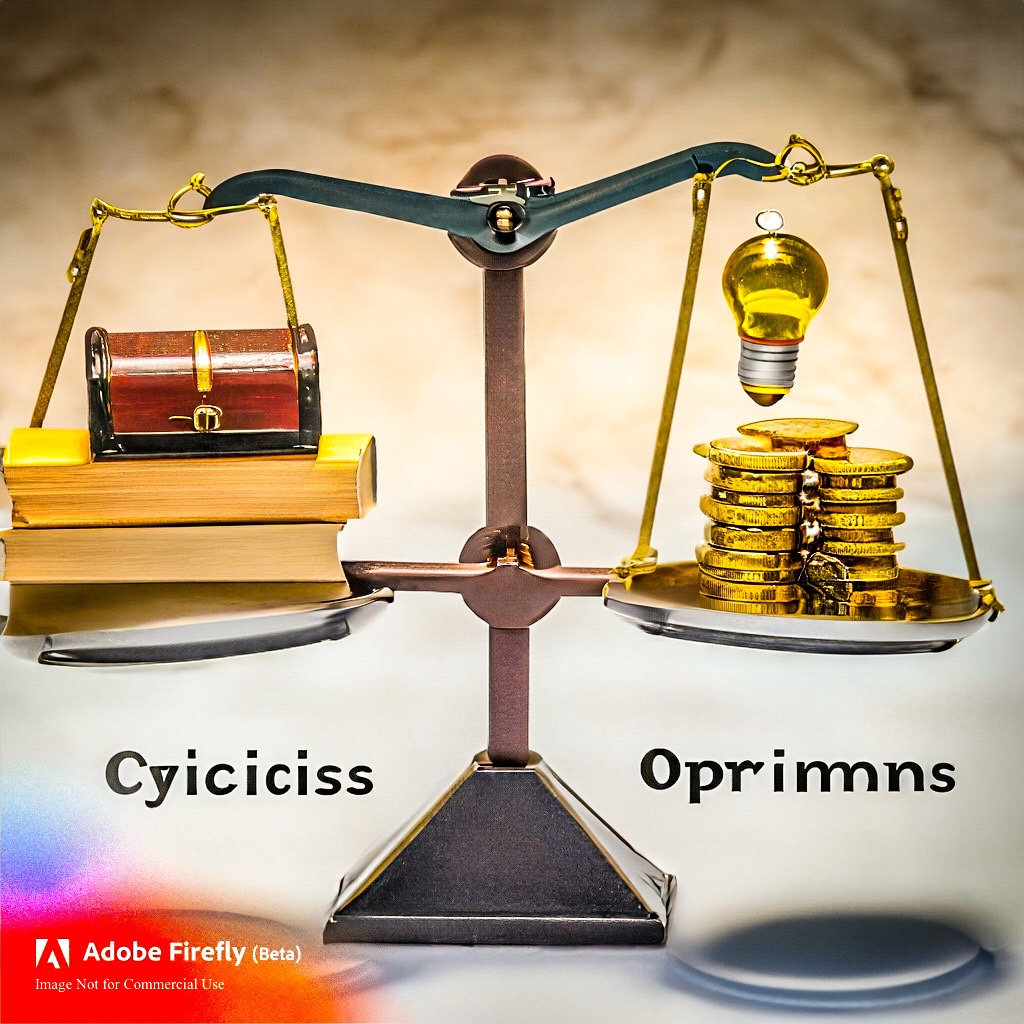
In the realm of business, leadership, and personal growth, there exists a perpetual tug-of-war between two contrasting perspectives: cynicism and optimism. The dichotomy is elegantly captured in the statement: “Cynics get to be right, and optimists get to be rich.” This sentence encapsulates not just a difference in outlook but also suggests a consequential impact on success. Let’s delve into the nuanced implications of being a cynic or an optimist, drawing on real-life anecdotes and thought-provoking quotes from renowned individuals.

Cynics VS Optimists

The Righteous Cynic

Cynicism often presents itself as a form of intellectual sophistication. Cynics pride themselves on their ability to see through facades and question the status quo. Warren Buffet once said, “Risk comes from not knowing what you’re doing.” Cynics argue that their critical mindset minimizes risk as they understand the world more clearly than their optimistic counterparts.

During the Dot-Com bubble of the late ’90s, a significant number of investors were swept up by unwarranted optimism. Cynics, on the other hand, warned about the unsustainability of businesses with no concrete revenue model. When the bubble burst, the cynics found themselves vindicated. They were “right,” but their caution had also held them back from other lucrative opportunities.

The Affluent Optimist

In stark contrast to cynics, optimists thrive on possibility and potential. They often see setbacks as temporary and treat failures as stepping stones to success. Henry Ford remarked, “Whether you think you can or you think you can’t, you’re right.” For optimists, the belief in oneself and in favorable outcomes fuels success, and more often than not, leads to financial gain.

Elon Musk’s venture into private space exploration through SpaceX is a prime example of optimism at work. Many considered the privatization of space travel a quixotic endeavor. Despite early failures and widespread skepticism, Musk’s unwavering optimism led to revolutionary advancements, including the reusable Falcon 9 rocket. Today, SpaceX stands as a testament to the affluence that optimism can yield.

The Balanced Perspective: Realist Optimism

While cynicism and optimism represent opposite ends of a spectrum, many successful leaders suggest a balanced approach—realist optimism. Bill Gates once shared, “Most people overestimate what they can do in one year and underestimate what they can do in ten years.” This perspective embodies a mixture of critical evaluation and long-term optimism.

In the world of investment, many hedge funds adopt a strategy of ‘hedging’ that combines both optimistic and cynical approaches. By diversifying assets and leveraging data analytics, they maximize gains while minimizing losses, demonstrating the efficacy of a balanced mindset.

The debate between cynicism and optimism is more than a philosophical divergence; it has real-world implications for success and wealth accumulation. While cynics often find their perspectives validated, they may miss out on expansive opportunities. Optimists, buoyed by a belief in positive outcomes, frequently achieve financial affluence even if they stumble along the way. The most effective leaders understand that a balance between the two—realist optimism—offers the most sustainable path to success. As you navigate your professional journey, consider which mindset serves you best in your quest for either righteousness or affluence—or perhaps, a harmonious blend of both.

The Two-Arrows Concept

“Between stimulus and response, there is a space. In that space is our power to choose our response. In our response lies our growth and our freedom.” – Viktor E. Frankl

Life often presents us with scenarios that feel like a double-edged sword. This brings us to the ‘Two-Arrow Concept,’ a philosophy that suggests we have two types of challenges to face: the initial problem itself (the first arrow) and our emotional reaction to it (the second arrow). In this blog, we’ll explore how understanding and applying this concept can offer profound insights into navigating life’s challenges.

Two-arrows Concept

Imagine you’ve been working diligently on a project at work, only to have it criticized publicly by your boss. The first arrow is the criticism. It’s external and beyond your control. The second arrow is your emotional reaction, which could range from humiliation to anger. This arrow is something you can control.

The Tale of Two Friends:

Two friends, Sarah and Emily, faced the same scenario. Sarah’s second arrow was aimed inward, resulting in feelings of inadequacy and self-doubt. Emily, on the other hand, chose to see the criticism as an opportunity for improvement. The difference in their outcomes was staggering. Sarah’s productivity dipped, while Emily went on to receive commendations for her work.

“Don’t Shoot the Second Arrow”

Buddhist philosophy advises us not to shoot the second arrow, meaning, don’t add suffering to an already challenging situation. As Henry David Thoreau said, “It’s not what you look at that matters; it’s what you see.” When we stop fueling the emotional fire, we empower ourselves to find rational, constructive responses to the first arrow.

The CEO’s Choice:

Consider a CEO faced with plummeting sales figures. The first arrow is the decline itself—hard, factual, and external. The second arrow could be panic or despair, but the seasoned CEO knows better. Instead, they initiate a detailed analysis, identify gaps, and reformulate strategies.

Mastering the Second Arrow

“Maturity is achieved when a person accepts life as full of tension,” said Joshua L. Liebman. Accepting that the first arrow will hit is half the battle. The mastery lies in how you deal with the second one.

Understanding the Two-Arrow Concept is akin to acquiring a life skill. It teaches us to separate the controllable from the uncontrollable, to act rather than react, and to turn challenges into stepping stones for growth. It’s not the absence of problems but your ability to deal with them that defines your journey.

“In the middle of difficulty lies opportunity,” Albert Einstein once said. So the next time life shoots an arrow at you, remember, you have the power to decide whether or not to shoot the second one.

The Two-Arrow Concept is not just a philosophy; it’s a framework for emotional intelligence and rational decision-making. By mastering this concept, you open doors to resilience, wisdom, and an enriched life experience.