10 Frameworks Used for Time Management

Most conversations about focus start in the wrong place.
They assume distraction is a failure of discipline.
They prescribe motivation, grit, or better habits.

focus, productivity, focus systems, time blocking, deep work, daily planning, execution over motivation, work design, attention management, knowledge work, high performance, founder productivity, executive productivity, burnout prevention, calendar discipline, task management, personal operating system, work smarter, intentional work, distraction control, modern work, systems thinking, planning your day, decision fatigue, cognitive load, async work, creator economy, startup life, leadership, self mastery

That framing is convenient and wrong.

Focus does not disappear because people lack willpower.
Focus disappears because the day is poorly designed.

You do not rise to the level of your goals.
You fall to the level of your systems.

This distinction matters because motivation is intermittent.
Systems operate continuously.

Why motivation keeps failing you

Motivation spikes and fades.
Energy fluctuates.
Attention degrades under noise.

Yet most productivity advice assumes you can repeatedly make high quality decisions in an environment full of interruptions. That assumption is false.

Environment and structure shape behavior whether you are alert or exhausted.
When focus breaks down, the cause is rarely effort.
It is friction, ambiguity, and constant renegotiation.

Focus is not summoned.
It is allowed.


The real problem: the unmanaged day

High performers are not short on ambition.
They are short on a repeatable daily operating system.

The same failure modes appear across roles and industries.

Tasks are scattered across email, chat, notes, and memory.
Calendars reflect meetings but ignore real work.
Days begin reactively, surrendered to the first notification.

The result is familiar.
Busyness without leverage.
Late nights fixing what should have been decided in the morning.

This is not a personal failing.
It is a systems failure.


What a real focus system must do

A functional focus system is not inspirational.
It is mechanical.
It works even on bad days.

At minimum, it must do three things.

Decide once
Define three to five outcomes that matter before the day starts.

Design the day
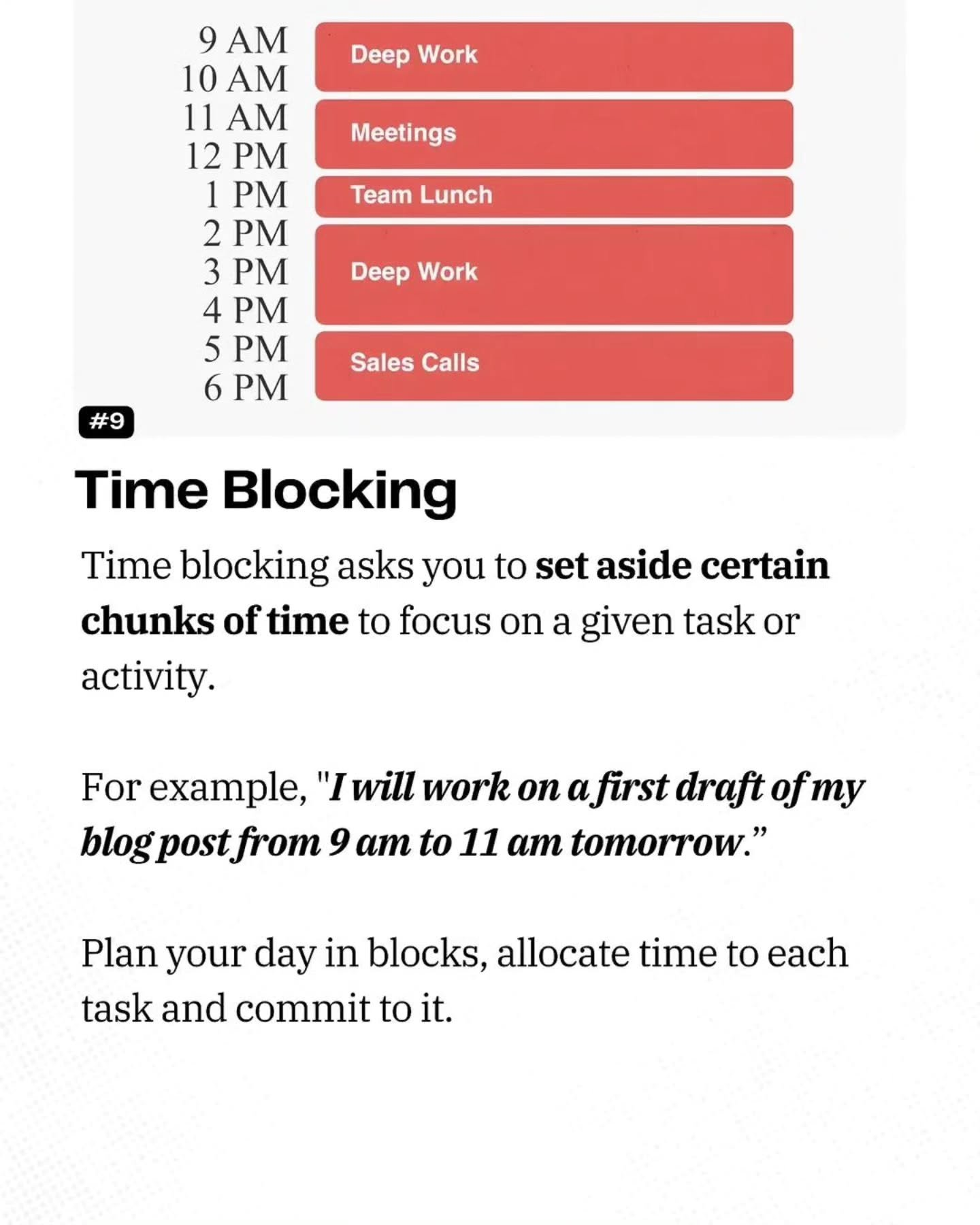
Translate those outcomes into explicit time blocks. Treat the calendar like a project plan.

Defend execution
Make distraction harder than staying on task.

Anything less is hope masquerading as planning.


Why tools matter more than techniques

Most people already know what they should do.
They still fail to do it.

The reason is friction.

If planning requires stitching together multiple tools, motivation is consumed before work begins.
If replanning is painful, people default to reacting.
If there is no feedback loop, the same mistakes repeat.

A system only works if it is easy to repeat.


How FocusDay fits

FocusDay is built around a single idea: remove friction from daily execution.

It does not try to motivate you.
It gives your day structure.

Practically, this means:

One place for the day
Instead of managing tasks across tools, your priorities live in one clean workspace. See how that works at https://usefocusday.com.

Time anchored work
Key tasks become calendar blocks, not vague intentions. Focus is tied to time, not mood. This is the core workflow shown on https://usefocusday.com.

Visible capacity
When everything sits on a timeline, overload is exposed early. Tradeoffs happen before the day collapses.

Execution feedback
Planned versus actual work is visible, allowing the system to improve instead of repeating the same errors.

The goal is simple.
You open FocusDay and the day is already decided.
Your job is execution, not hourly renegotiation.


A practical way to start today

Use FocusDay as the container for execution, not just another task list.

Morning
Open FocusDay before opening email.
Write the three outcomes that would make today successful.
Block time for each one. You can start this flow directly at https://usefocusday.com.

During the day
Work from the plan.
If something urgent appears, replan consciously inside FocusDay instead of letting it hijack the day.

Evening
Mark what was completed.
Adjust estimates.
Notice what consistently slips.

That pattern is not a character flaw.
It is a systems gap asking to be fixed.


The shift

Over time, focus stops being something you chase.
It becomes the default output of a well designed day.

Motivation becomes optional.
Clarity becomes automatic.
Progress becomes repeatable.

That is the difference between hoping to focus
and building a system that produces it.

If the problem is structural, the solution must be too.
That is exactly what FocusDay is built for.
Start by designing tomorrow at https://usefocusday.com.

The Paradox of Choice

In an era marked by an unprecedented proliferation of choices, executives and decision-makers are often at the crossroads of complexity and opportunity. Whether deliberating over strategic investments or lifestyle selections, the plethora of options available has made the decision-making process not just intricate but often overwhelming. Does this abundance truly enhance our quality of life or does it dilute it?

The Underlying Dilemma

Barry Schwartz, a renowned psychologist, argues in his seminal work, The Paradox of Choice, that an excess of options can lead to a counterintuitive outcome: diminished happiness, increased anxiety, and pervasive dissatisfaction. Schwartz posits that the cognitive load involved in evaluating myriad choices induces not just decision fatigue but a perpetual state of second-guessing and remorse.

The Psychological Toll

Endorsed by various research studies, Schwartz’s theory highlights that an overabundance of choices exacerbates levels of anxiety, regret, and decision fatigue. When inundated with options, individuals are more susceptible to engage in unfavorable comparisons with others’ choices, thereby augmenting dissatisfaction—even when the initial selection met their criteria.

Executive Strategies to Mitigate the Paradox

Navigating this paradox requires a judicious approach. Here are some key strategies tailored for executives:

  1. Constrain Your Options: Focus on pivotal decisions and filter out the extraneous choices. This refines the decision-making terrain, making it more manageable and less mentally taxing.
  2. Prioritize Your Objectives: Ground your decisions in a well-defined set of goals and values. It aids in aligning choices with personal or organizational objectives, thereby mitigating regret.
  3. Embrace Compromise: In a complex ecosystem, achieving the ideal outcome is often illusory. Be prepared to make concessions on less critical fronts to attain primary objectives.
  4. Cultivate Resilience in the Face of Regret: Even the most adept decision-makers err. Developing a resilience toward regret allows one to glean insights from missteps rather than being paralyzed by them.

Additional Considerations

  • The paradox takes a more acute form for individuals predisposed to anxiety or perfectionism. Such personalities often find the act of choosing paralyzing, regardless of the scale of the decision.
  • Those who have a proclivity for novelty and are easily bored may find commitment to a single option challenging, thereby amplifying dissatisfaction.
  • For those incessantly seeking the optimal choice, the quest for perfection becomes a labyrinthine ordeal, leaving them perpetually discontent.

Actionable Remedies

  1. Temporal Segmentation: Tackle one decision at a time to avoid cognitive overload.
  2. Align Choices with Core Values: Consistently ask what is paramount to you or your organization when faced with a decision.
  3. Willingness to Compromise: A balanced approach often yields the most sustainable outcomes.
  4. Foster a Mindset of Learning from Regret: Regret should serve as a learning curve rather than a cul-de-sac of lamentation.

The Paradox of Choice is not merely an abstract psychological concept but a palpable challenge that infiltrates both personal and professional spheres. By acknowledging its intricacies and employing targeted strategies, executives can enhance their decision-making acumen, reduce cognitive fatigue, and bolster overall well-being.