In the competitive world of business, achieving excellence often means adopting strategies that push you into the top 5% of performers. The key lies in an iterative process that focuses on rapid development, continuous feedback, relentless improvement, and flawless execution. Here’s how you can master this top-tier strategy:
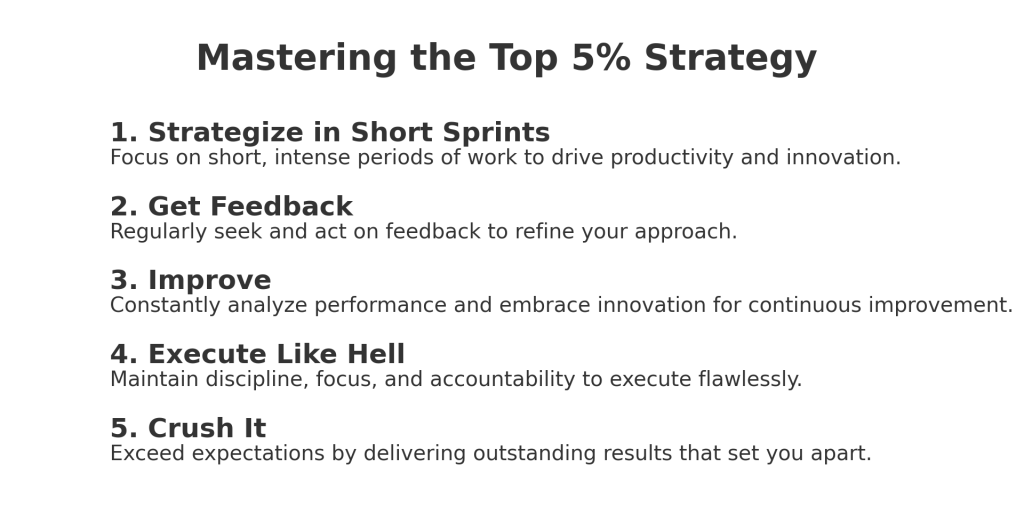
1. Strategize in Short Sprints
Why It Matters:
Short sprints allow for focused, intense periods of work that drive productivity and innovation. By breaking down projects into manageable segments, you can maintain momentum and quickly adapt to new information or changing conditions.
Consider the early days of Tesla. Elon Musk adopted a sprint-based approach to quickly iterate on designs and technology. This approach allowed Tesla to innovate rapidly, delivering the groundbreaking Model S in record time, which set new standards for electric vehicles.
Implementation:
- Set Clear Goals: Define what you aim to achieve in each sprint. Ensure these goals are specific, measurable, attainable, relevant, and time-bound (SMART).
- Prioritize Tasks: Identify high-impact tasks that can be accomplished within the sprint period.
- Time Boxing: Allocate fixed time slots for each task, ensuring that no single activity monopolizes your time and resources.
2. Get Feedback
Why It Matters:
Feedback is crucial for understanding how your strategies and actions are perceived and where improvements can be made. It provides the insights needed to refine your approach and align it more closely with desired outcomes.
When Sarah Blakely founded Spanx, she relied heavily on feedback from friends, family, and even store clerks. By listening to the needs and preferences of real customers, she was able to refine her product and create a billion-dollar business that revolutionized the shapewear industry.
Implementation:
- Create Feedback Loops: Regularly seek input from stakeholders, team members, and customers.
- Encourage Open Communication: Foster an environment where constructive criticism is welcomed and valued.
- Act on Feedback: Use the insights gained to make informed adjustments to your strategy.
3. Improve
Why It Matters:
Continuous improvement is the backbone of sustained success. By constantly refining your processes and strategies, you can stay ahead of the competition and better meet the needs of your market.
Career Insight:
Jeff Bezos’s philosophy at Amazon has always been to “fail fast” and continuously improve. This mindset has driven Amazon to innovate relentlessly, from its humble beginnings as an online bookstore to becoming a global e-commerce giant and beyond, consistently setting the bar for customer satisfaction and operational efficiency.
Implementation:
- Analyze Performance: Regularly review performance metrics to identify areas for improvement.
- Embrace Innovation: Stay open to new ideas and technologies that can enhance efficiency and effectiveness.
- Implement Incremental Changes: Make small, consistent adjustments to processes to drive continuous improvement without overwhelming your team.
4. Execute Like Hell
Why It Matters:
Execution is where strategies and plans are put into action. Excellence in execution requires discipline, focus, and a relentless drive to achieve the set goals.
Wealth Example:
Warren Buffett’s success is often attributed to his unwavering focus and disciplined execution. His investment strategy is built on thorough research and decisive action, enabling him to consistently outperform the market and build one of the most significant fortunes in history.
Implementation:
- Maintain Focus: Avoid distractions and ensure that every team member is aligned with the sprint goals.
- Drive Accountability: Hold yourself and your team accountable for delivering results.
- Leverage Tools and Resources: Utilize project management tools and resources to streamline execution and track progress.
5. Crush It
Why It Matters:
To “crush it” means not just meeting but exceeding expectations. It’s about delivering outstanding results that set you apart from the competition and establish you as a leader in your field.
Inspirational Story:
Consider the journey of Oprah Winfrey. From humble beginnings, she crushed every challenge in her path through relentless work ethic, sharp strategic moves, and a commitment to excellence. Her ability to connect with audiences and consistently deliver high-quality content made her a media mogul and a billionaire, setting new standards in the industry.
Implementation:
- Set High Standards: Aim for excellence in every task and project.
- Celebrate Success: Recognize and reward achievements to motivate continued high performance.
- Reflect and Learn: After achieving a milestone, review what worked well and what could be improved for future sprints.
By adopting a strategy of short sprints, continuous feedback, relentless improvement, disciplined execution, and aiming to “crush it,” you position yourself to achieve and sustain top 5% performance. This iterative, focused approach not only drives immediate results but also fosters a culture of excellence and innovation, ensuring long-term success in an ever-evolving business landscape.
Embrace this strategy, and watch as your team moves from strength to strength, consistently delivering outstanding results and setting new benchmarks for success. By learning from the successes of industry leaders and applying these principles to your own endeavors, you too can achieve remarkable career and financial success.

 Maverick