The Overlooked Element in Success: Embracing the Role of Luck

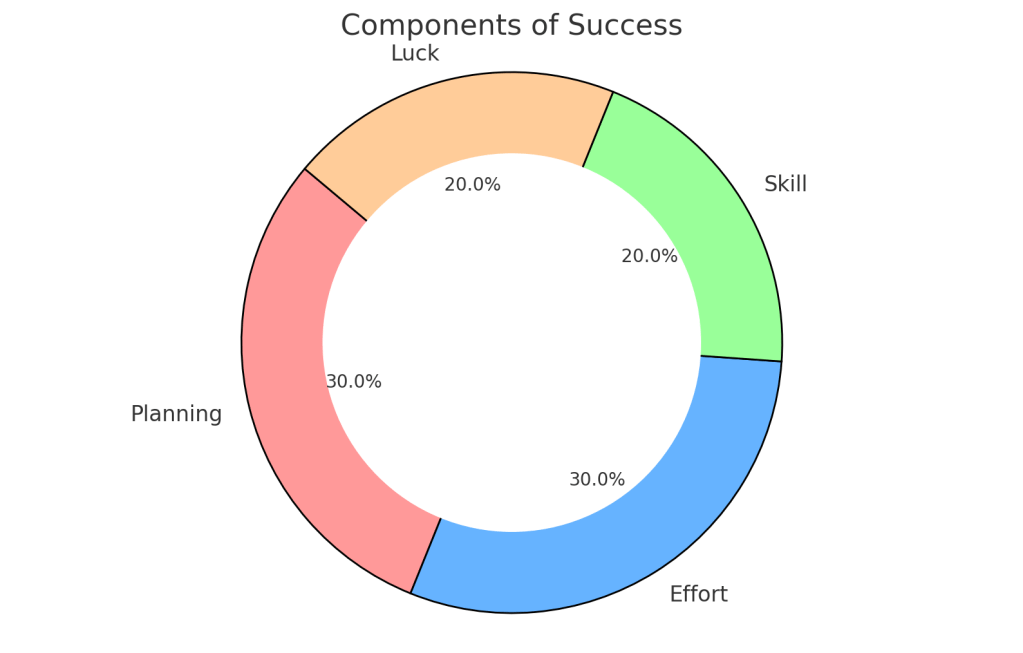
In a world driven by meticulous planning, relentless effort, and strategic foresight, the notion of luck has often been relegated to the realm of the inconsequential. However, as we strive for excellence in business and life, it is imperative to recognize that luck plays an indispensable role in our successes and failures.
Role of Luck

The Fallacy of Absolute Control

Success is frequently portrayed as a direct result of deliberate actions and decisions. Influential voices, such as Twitter founder Jack Dorsey, propagate the idea that “success is never accidental.” This perspective, while appealing, overlooks the inherent randomness that influences outcomes. The aphorism “you make your own luck” is fundamentally flawed, as it negates the very definition of luck—events beyond our control.

The Misconception of Meritocracy

The concept of meritocracy suggests that success is a result of individual merit alone. This idea, popularized through the lens of rigorous discipline and hard work, dismisses the subtle yet significant influence of luck. The backlash against Michael Phelps during the London Olympics, where his natural physical advantages were criticized, underscores the uncomfortable reality that innate talent—and by extension, luck—plays a critical role in achievement.

Recognizing Luck as a Civilizing Force

Acknowledging the role of luck is not an admission of weakness; rather, it is a testament to the complexity of success. Our lives are interwoven with threads of chance and choice, and recognizing this interplay can lead to a more humane and empathetic worldview. The late sociologist Michael Young, who coined the term “meritocracy,” later decried its misinterpretation, emphasizing that an overemphasis on individual merit can foster a divisive and unjust society.

Integrating Luck into Leadership

For executives and leaders, understanding the role of luck is crucial in shaping more realistic and inclusive strategies. Success is not solely a product of planning and execution but also of timing, opportunity, and fortuitous circumstances. By acknowledging this, leaders can foster environments that are resilient to the unpredictability of luck and more supportive of diverse paths to success.

As we navigate the complexities of modern business, it is essential to strike a balance between diligent effort and the acceptance of luck’s role. This balanced perspective not only leads to more effective leadership but also cultivates a culture that values fairness, humility, and resilience. Embracing luck as a vital component of success enriches our understanding of achievement and fosters a more inclusive approach to leadership and growth.

The Power of Attention

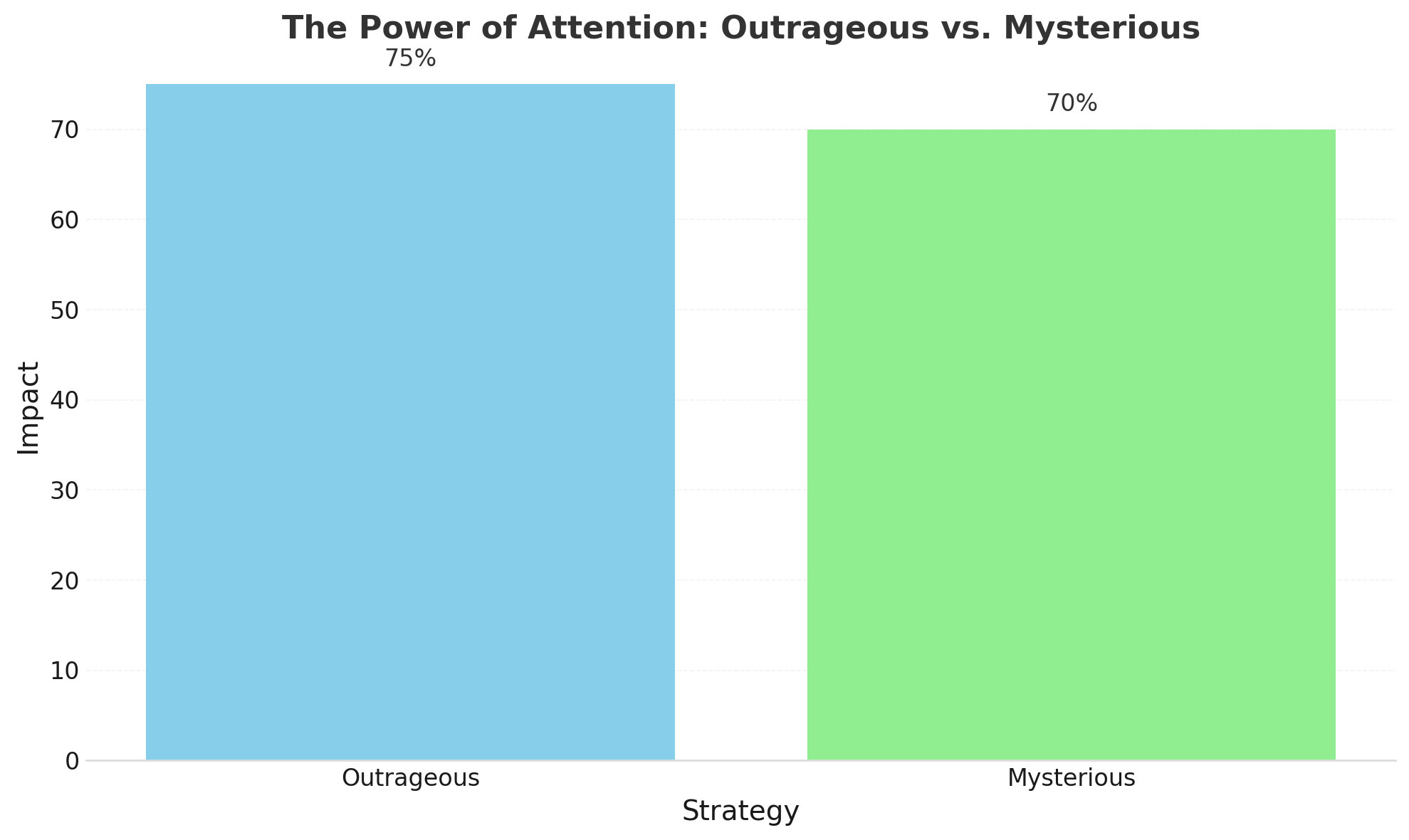
In today’s fast-paced, information-saturated world, capturing and maintaining attention has become a valuable currency. Whether you’re an entrepreneur, artist, or influencer, your ability to stand out from the crowd can make or break your success. This is where Law 6 comes into play: Attract Attention by being outrageous or creating an aura of mystery.

The Attention Economy

We live in an attention economy, where the most precious commodity is not money or resources, but the ability to capture and hold people’s focus. With countless stimuli vying for our attention every second, those who can cut through the noise and make a lasting impression are the ones who ultimately succeed.

The Power of Being Outrageous

One effective way to attract attention is by being outrageous. This doesn’t mean you should be offensive or harmful, but rather that you should push boundaries and challenge conventions in a way that makes people take notice. Think of figures like Lady Gaga, Elon Musk, or Richard Branson – their unconventional approaches and bold statements have kept them in the public eye and contributed to their success.

Being outrageous can involve:

  1. Making bold claims or predictions
  2. Adopting an unusual personal style
  3. Taking on seemingly impossible challenges
  4. Speaking out on controversial topics
  5. Creating products or experiences that defy expectations

The Allure of Mystery

On the other hand, cultivating an air of mystery can be equally effective in attracting attention. Human curiosity is a powerful force, and people are naturally drawn to what they don’t fully understand. By strategically withholding information or creating an enigmatic persona, you can pique interest and keep people engaged.

Ways to create mystery include:

  1. Teasing upcoming projects or announcements
  2. Maintaining a low profile on social media
  3. Crafting an intriguing personal narrative
  4. Using symbolism or hidden meanings in your work
  5. Leaving certain aspects of your life or business open to interpretation

The Value of Any Attention

It’s important to note that, according to this law, any attention – positive or negative – is better than being ignored. While it’s generally preferable to attract positive attention, even controversy or criticism can work in your favor by keeping you in the public eye and sparking discussions around your brand or persona.

However, it’s crucial to navigate this carefully. While negative attention can initially boost visibility, it’s essential to have a strategy for turning it into a positive narrative or leveraging it for growth.

Attention Leads to Wealth

The ultimate goal of attracting attention is to convert it into tangible benefits, often in the form of wealth. When you successfully capture people’s interest, you open doors to numerous opportunities:

  1. Increased brand recognition and loyalty
  2. Higher engagement rates on social media and other platforms
  3. More opportunities for collaborations and partnerships
  4. Greater media coverage and free publicity
  5. Improved sales and revenue streams

In a world where attention is increasingly scarce and valuable, mastering the art of attracting and maintaining it can be a game-changer for your personal and professional success. Whether you choose to be outrageous, mysterious, or a combination of both, remember that the key is to be authentic and strategic in your approach.

By implementing Law 6 and making yourself impossible to ignore, you can harness the power of attention to create wealth, influence, and lasting impact in your chosen field. Just remember to use this power responsibly and always strive to provide value to your audience, even as you captivate their attention.

Q Confidence

Achieving success in your career and building wealth requires not just hard skills, but also the quiet confidence that can set you apart in any professional setting. Here are six secrets to cultivating that confidence,

Q Confidence

1. Learn & Grow Daily

The Key to Quiet Confidence is Competence

One of the most powerful ways to build confidence is through continuous learning. Competence instills confidence because when you know more, you perform better, and others take notice.

Actions:

  • Carve out 30 minutes to read: Successful people like Bill Gates and Warren Buffett attribute a significant portion of their success to their voracious reading habits. Gates famously reads about 50 books a year, which equates to roughly one book a week.
  • Listen to a podcast or audiobook during your commute: Take advantage of your commute time by absorbing new information. Audiobooks like “The Lean Startup” by Eric Ries or podcasts like “How I Built This” can provide valuable insights.
  • Pretend everyone was sent to teach you something: Approach each interaction with curiosity. This mindset helped Howard Schultz transform Starbucks from a small coffee chain into a global phenomenon. He learned from every person he met, from baristas to suppliers.

2. Hone Your Body Language

People will like/dislike your communication based on:

  • 7% words
  • 38% tonality and face
  • 55% body language

Actions:

  • Stand up straight, shoulders back: This posture exudes confidence and has been demonstrated by leaders like Michelle Obama, whose presence alone can command a room.
  • Make eye contact: Eye contact can make or break first impressions. In his early career, Steve Jobs was known for his intense eye contact, which helped him connect deeply with his audience and colleagues.
  • Smile and give a firm handshake: A genuine smile and a confident handshake can open many doors, as illustrated by the success stories of numerous entrepreneurs.

3. Be Interested, Not Interesting (SHR Method)

Seen:

  • Give eye contact and offer a compliment: Richard Branson, founder of the Virgin Group, is known for his ability to make others feel seen and appreciated, a trait that has helped him build a vast network and a successful empire.

Heard:

  • Ask good questions and be interested, not interesting: Dale Carnegie, in his classic book “How to Win Friends and Influence People,” emphasizes the power of showing genuine interest in others.

Remembered:

  • Remember names and recall what you discussed: Former U.S. President Bill Clinton is renowned for his ability to remember people’s names and details about their lives, making each person he meets feel valued.

4. Create Your Own Momentum

Write Down Your Wins:

  • Compliments, a presentation you crushed, solo travel, etc.: Tracking your achievements helps build self-confidence. For instance, Oprah Winfrey has kept journals of her accomplishments, which she reviews regularly to remind herself of her capabilities.

Review Your Wins Regularly:

  • See how far you’ve come and how seriously capable you are: This practice is akin to athletes reviewing their performance highlights to boost their confidence before a big game.

5. Pause Before Speaking (30% Rule)

When Speaking, Allow Ourselves Only 30% of the Time a Listener Would Give Us to Fill a Pause:

  • You have more time to reply than you think. Wait for 2 seconds first: This technique is used by seasoned public speakers like Barack Obama, who often pauses to gather his thoughts, enhancing the impact of his words.
  • Pause in speaking + eye contact = confidence: This combination conveys calm and authority.

6. Embrace Your Flaws (Pratfall Effect)

You Don’t Need to Hide Parts of Yourself to Be Accepted by Others:

  • Think of your favorite movie or TV character. They have at least one weakness. You wouldn’t like them as much otherwise. Imperfection is humanizing: In his memoir, “Shoe Dog,” Phil Knight, co-founder of Nike, openly shares his failures and insecurities, endearing him to readers and demonstrating that vulnerability can be a strength.
  • Own your flaws, be magnetic: By embracing your imperfections, you become more relatable and authentic, qualities that can enhance your leadership and influence.

Quiet confidence is a powerful asset in career and wealth building. By learning and growing daily, honing your body language, being genuinely interested in others, creating your own momentum, pausing before speaking, and embracing your flaws, you can cultivate a presence that commands respect and opens doors to new opportunities. Embrace these secrets and watch your career and wealth soar.