In the intricate tapestry of executive decision-making, leaders are often tasked with deciphering patterns amidst chaos. Just as an astute cartographer utilizes various instruments to chart unexplored territories, business leaders must harness strategic frameworks to illuminate the convoluted pathways of the corporate landscape. The Stacey Matrix stands out as a beacon in this endeavor.
Understanding the Stacey Matrix
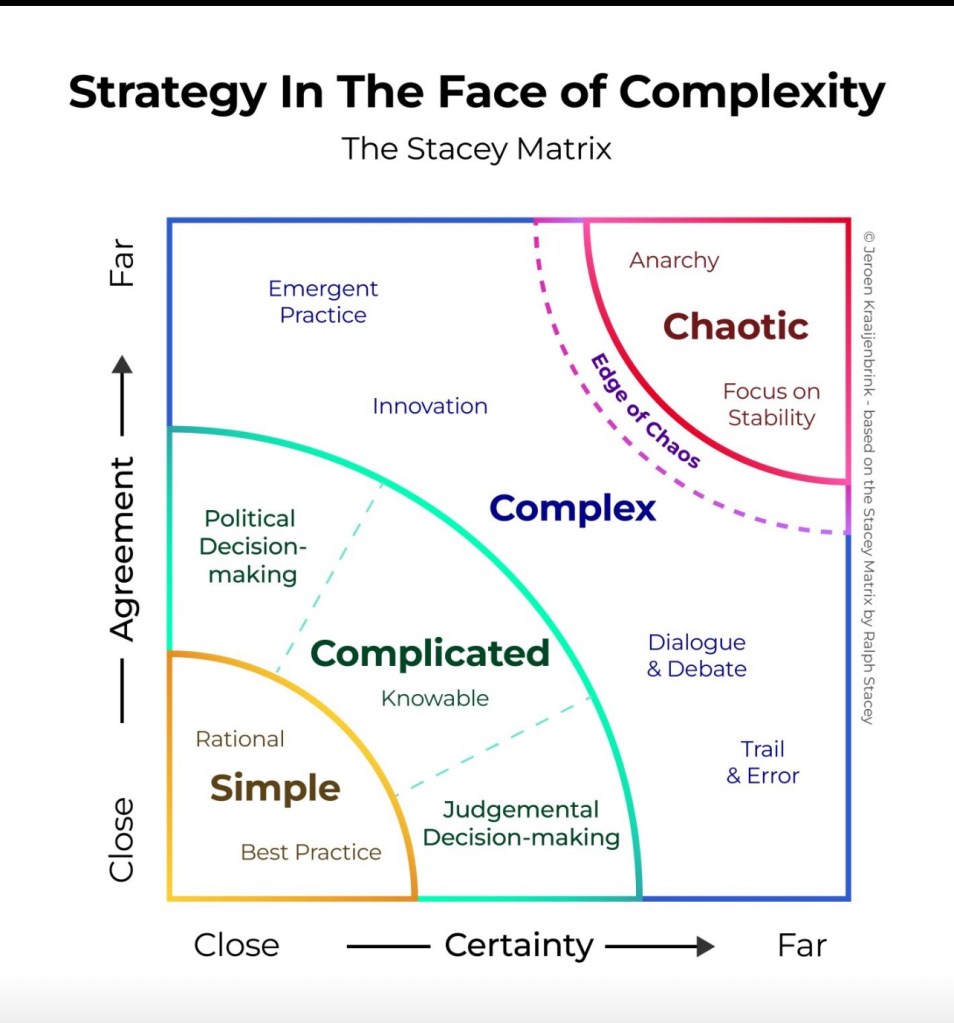
Developed by Ralph D. Stacey, this matrix is not just another tool; it’s an executive’s compass. It categorizes challenges based on two pivotal axes: the predictability of outcomes and consensus on actions. By situating challenges within this matrix, leaders can discern whether they’re confronting simple, complicated, complex, or chaotic dilemmas.
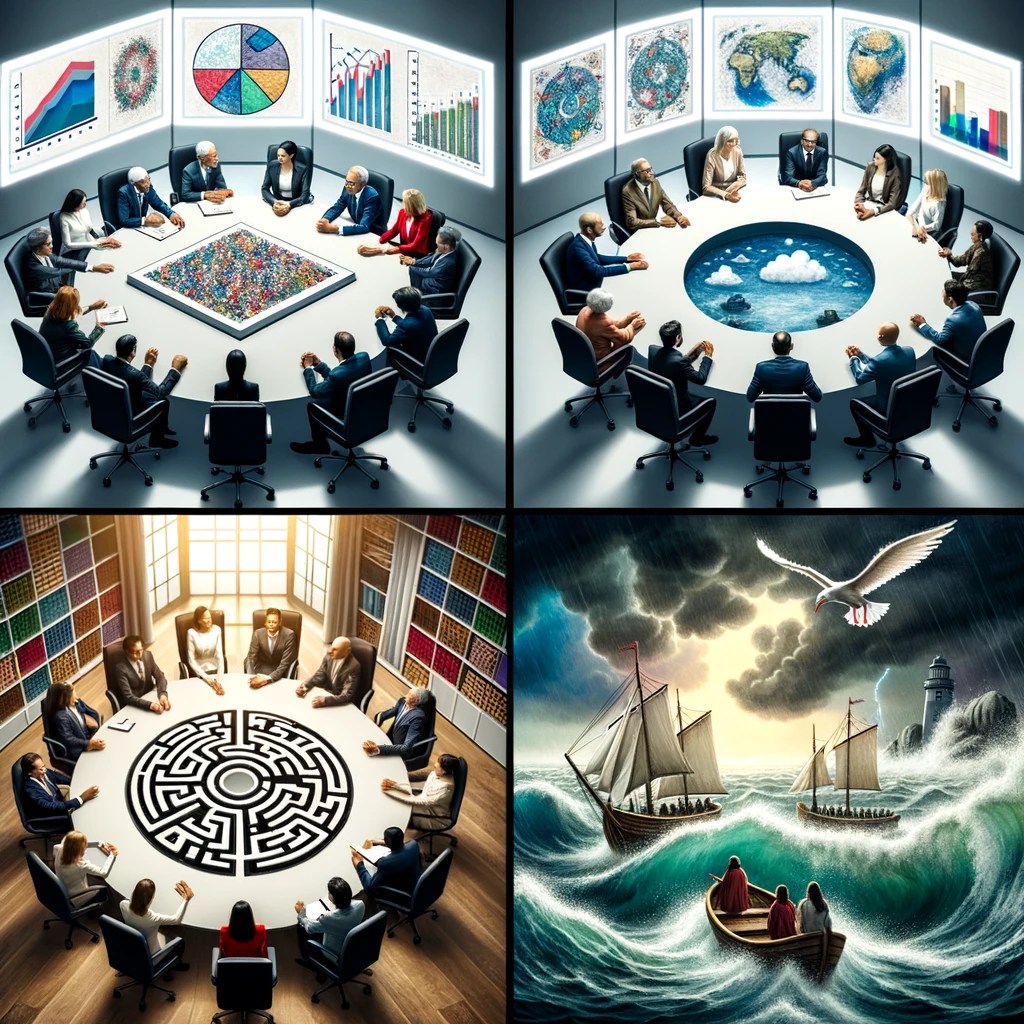
Consider a classical orchestra, where every note is scripted, and musicians play in perfect harmony following a predetermined composition. This mirrors the “simple” quadrant of the Stacey Matrix – a realm of well-understood problems with clear solutions.
Contrast this with a jazz ensemble, where improvisation reigns. Musicians listen, adapt, and create on-the-fly, producing a melody that’s unpredictable yet harmonious. This embodies the “complex” quadrant, where ambiguity is the norm, demanding agile leadership and innovative problem-solving.
Why the Stacey Matrix is Indispensable for Modern Executives
- Precision in Strategy: By classifying challenges, executives can sculpt tailored strategies, ensuring efficient resource allocation.
- Proactive Risk Management: Early identification of the nature of a challenge facilitates risk anticipation and proactive mitigation.
- Empowered Collaboration: With a clear understanding of the challenge’s complexity, teams can synergize their expertise more effectively.
In today’s volatile corporate environment, the Stacey Matrix emerges as more than a model; it’s a lighthouse guiding executives through the fog of complexity. By harnessing its insights, leaders can navigate with confidence, ensuring decisions are anchored in discernment and strategic vision.


 Maverick